Mon, November 02, 2026

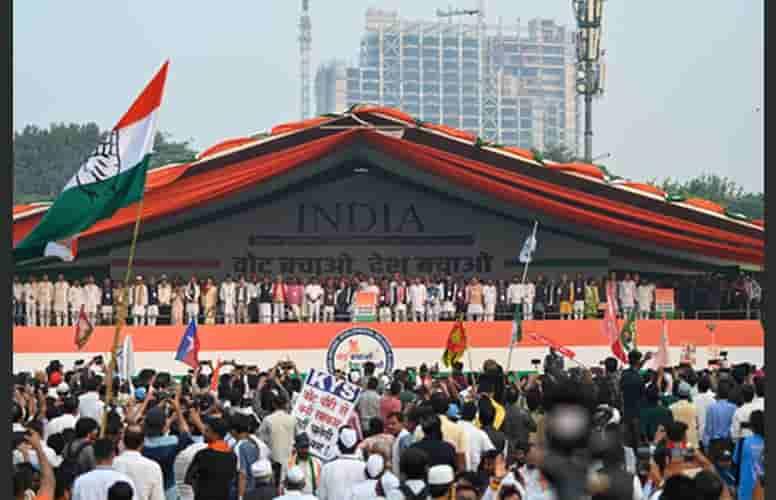
Photo: IANS
The Bharatiya Janata Party (BJP) and opposition leaders on Monday traded sharp accusations over the INDIA bloc's rally in Delhi, with the ruling party questioning the gathering's turnout and purpose, while Opposition leaders described it as a major show of strength against alleged electoral irregularities.
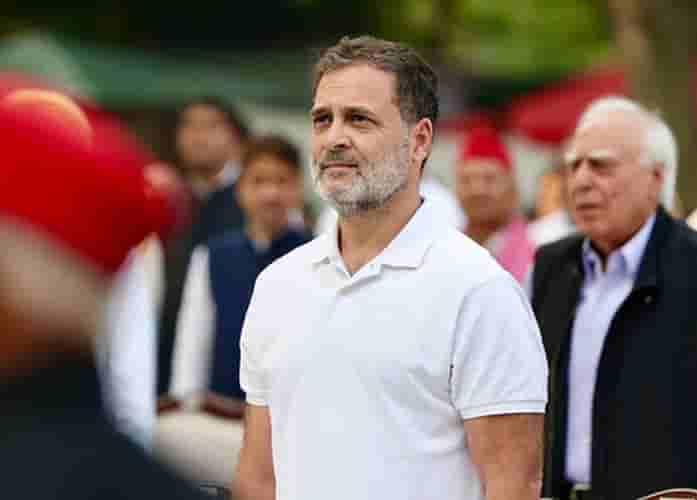
The BJP targeted Congress leader and Leader of the Opposition in the Lok Sabha Rahul Gandhi, claiming that his expectations of attracting 10 lakh people to the rally had not been met, with several chairs reportedly remaining vacant.
BJP Rajya Sabha MP Tarun Chugh alleged that the rally had failed to generate the expected public response and questioned the clarity of its central message.
"Rahul Gandhi, who had claimed that a crowd of 10 lakh people would gather, saw an empty ground and vacant chairs at yesterday's rally, and even the subject of the rally was unclear," Chugh told IANS.
He further claimed that people had rejected the Congress's allegations of vote theft and accused Rahul Gandhi of pursuing a political narrative that targeted constitutional institutions and the judiciary.
BJP spokesperson Guru Prakash Paswan also criticised the gathering, describing it as an attempt to protect political families rather than defend democracy.
"Yesterday's rally was not about 'Save Democracy'; it was about saving the dynasty, saving the son and saving the daughter," Paswan said.
Listing the political families represented at the event, he pointed to the presence of leaders associated with the Gandhi, Lalu Prasad Yadav, Mulayam Singh Yadav, Sharad Pawar, Mufti Mohammad Sayeed and Sheikh Abdullah families.
JD(U) National Spokesperson Rajiv Ranjan also questioned the Congress's political standing under Rahul Gandhi's leadership, arguing that the party's electoral performance had steadily declined. He noted that the Congress had failed to cross the 100-seat mark in the Lok Sabha in three consecutive general elections.
Opposition leaders, however, rejected the BJP's assessment and maintained that the rally had drawn a substantial crowd from across the country.
Shiv Sena (UBT) MP Sanjay Raut accused the BJP of being unsettled by the gathering, claiming that the large turnout had made the ruling party uncomfortable.
"The BJP can call it a flop show. These are frightened people. Seeing such a huge crowd and the gathering of people, they got scared," Raut said.
He compared the gathering with the political mobilisation associated with Jayaprakash Narayan's movement in 1974, describing it as one of the biggest rallies held in Delhi since that period. He said the event had received a strong response to Rahul Gandhi's call to "Save Democracy, Stop Vote Theft and Save the Constitution".
Congress MP Anil Kumar Yadav also dismissed the BJP's criticism, claiming that hundreds of thousands of people had travelled from different parts of the country to participate. He said the participation of INDIA bloc leaders reflected growing concerns among sections of the public over alleged electoral irregularities.
Congress MP Pramod Tiwari went further, arguing that the turnout should not be assessed solely by the number of people inside the rally venue. He claimed that the surrounding roads were crowded and that the number of people outside the ground was twice that of those inside.
Tiwari described the rally as one of the most successful political gatherings since Independence and said its significance lay not merely in the size of the crowd but also in the determination expressed by participants.
He accused the BJP of undermining democratic institutions and said the Opposition remained committed to defending the Constitution.
The exchange of accusations reflects the continuing political confrontation between the BJP and the INDIA bloc over Rahul Gandhi's allegations of vote manipulation and the Opposition's campaign to raise questions about the electoral process. While the BJP has dismissed the campaign as politically motivated, opposition parties have maintained that electoral transparency and the protection of constitutional institutions remain central to their concerns.


© Copyright
Reporter Post.All Rights Reserved |
Powered by: Aptilogic Software |
 |
Page rendered in 0.0099 seconds.