Sat, October 24, 2026

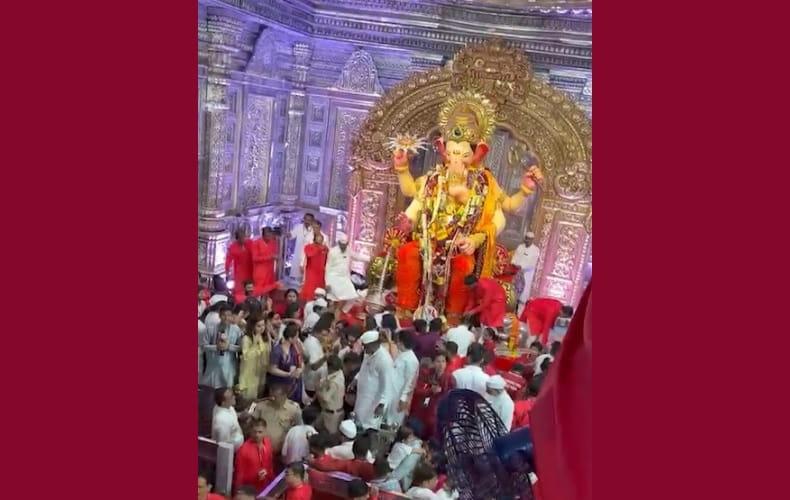
Photo: IANS
Ganesh Chaturthi celebrations began across India on Monday with immense religious fervour, with Maharashtra emerging as the epicentre of grand festivities as devotees welcomed idols of Lord Ganesha into homes, temples and elaborately decorated public pandals.
From Mumbai and Pune to Nagpur and other cities, the festival has transformed streets and neighbourhoods with colourful decorations, illuminated pandals, devotional music and cultural programmes. Devotees offered prayers, flowers, sweets and traditional offerings to Lord Ganesha, seeking his blessings for prosperity, wisdom, peace and new beginnings.
Ganesh Chaturthi marks the birth of Lord Ganesha, who holds a prominent place in Hindu worship and is traditionally invoked before the beginning of important ventures. The 10-day celebrations will conclude with Anant Chaturdashi on September 25, when devotees will bid farewell to the deity through immersion processions.
Maharashtra's public Ganeshotsav has a long and distinctive history. The present-day tradition of large-scale public celebrations in Mumbai is widely associated with freedom fighter Lokmanya Bal Gangadhar Tilak, who began the public Ganeshotsav at Keshavji Nayak Chawl in Girgaum in 1893. The initiative helped bring people together and create a platform for public participation during the freedom movement.
However, the history of public Ganeshotsav also has strong roots in Pune. The Bhausaheb Rangari Ganpati Trust maintains that Bhausaheb Rangari began the public celebration in Pune in 1892, a year before Tilak's initiative in Mumbai. The historical contribution of both cities continues to give Maharashtra's Ganeshotsav a unique cultural identity.
In Pune, the arrival ceremony of Shrimant Bhausaheb Rangari Ganpati, regarded by the trust as India's first public Ganpati, was held amid the traditional beats of dhol-tasha. Large numbers of devotees participated in the celebrations, while special prayers were also offered at the renowned Shrimant Dagdusheth Halwai Ganpati Temple.
Mumbai, meanwhile, witnessed elaborate preparations at several iconic Ganesh pandals and temples. Among the prominent celebrations were those at Lalbaugcha Raja, Tejukaya Mandal, Ganesh Gully, GSB Seva Mandal at Matunga-Kings Circle, Andheri-cha-Raja, Shri Bal Gopal Ganesh Utsav Mandal at Marine Lines, Kethwadi, GSB Sarvajanik Ganeshutsav Samiti in Wadala, Sahyadri Mandal in Tilak Nagar-Chembur and Fort Vibhag Sarvajanik Ganeshutsav Mandal.
Thousands of devotees queued up at Lalbaugcha Raja to seek darshan on the first day of the festival. The famous pandal witnessed heavy footfall as devotees waited patiently for an opportunity to offer prayers to Bappa.
The Siddhivinayak Temple in Mumbai was also decorated for the occasion, adding to the city's festive atmosphere.
In Nagpur, large crowds gathered at the famous Ganesh Tekdi Temple from the morning. Devotees waited in long queues to seek blessings for happiness, prosperity, peace and well-being. The temple premises resonated with chants of “Ganpati Bappa Morya” as worshippers continued to arrive.
Special arrangements were made at several major venues to manage the large crowds. One devotee told IANS that separate queues had been arranged for men and women, while e-rickshaws and electric vehicles were made available to help elderly devotees reach the temple comfortably.
Another devotee described the festival as an occasion that goes beyond religious rituals, saying the spirit of Ganesh Chaturthi lies in overcoming difficulties and spreading happiness among others.
With celebrations continuing for the next 10 days, cities across Maharashtra are expected to remain immersed in devotional activities, cultural programmes and community gatherings before the festival culminates in the grand immersion processions on Anant Chaturdashi.



© Copyright
Reporter Post.All Rights Reserved |
Powered by: Aptilogic Software |
 |
Page rendered in 0.0112 seconds.
|
Page rendered in 0.0112 seconds.