Thu, September 03, 2026

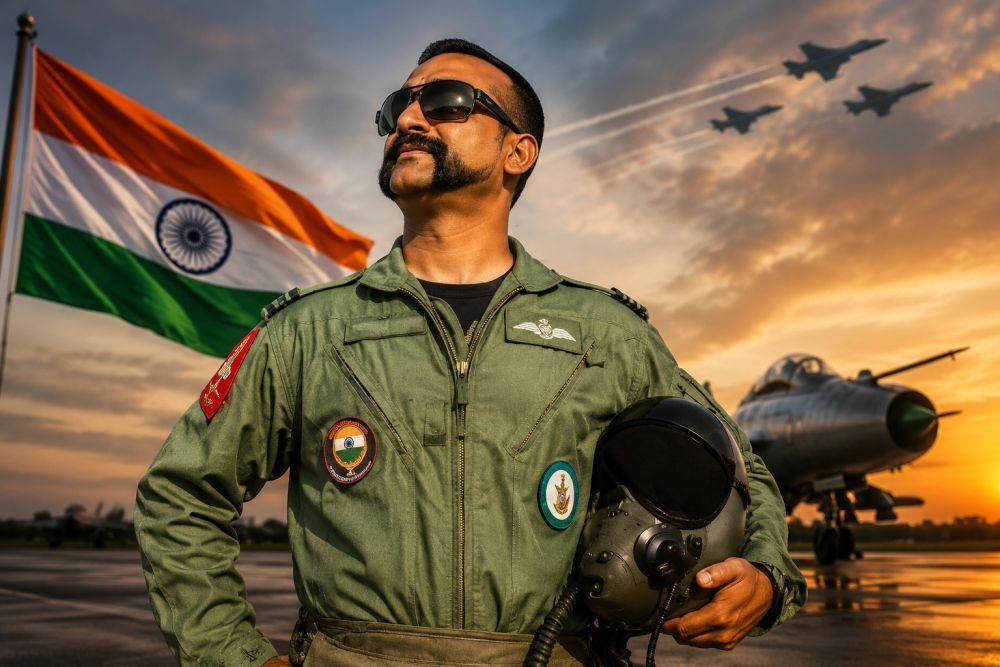
Former Indian Air Force Group Captain Abhinandan Varthaman, whose name became synonymous with courage and composure after the 2019 Balakot airstrike and the subsequent India-Pakistan aerial engagement, has begun a new chapter in his flying career.
After nearly two decades in the Indian Air Force as a fighter pilot, Abhinandan has moved to the civil aviation sector and joined Goa-based private airline FLY91. He is now set to fly passenger aircraft, marking a significant transition from operating fighter jets in the military to carrying civilians across India's regional air network.
Abhinandan retired from the Indian Air Force on March 31, 2026, and joined FLY91 in August. His decision to take voluntary retirement before the normal end of his service tenure has allowed him to continue his professional flying career in the rapidly expanding commercial aviation sector.
During his IAF career, Abhinandan flew the MiG-21 Bison. He came into the global spotlight on February 27, 2019, a day after India's Balakot airstrike, when Indian and Pakistani fighter aircraft were involved in an aerial confrontation.
During the engagement, Abhinandan pursued a Pakistani F-16 and shot it down, according to India's account of the encounter. His own MiG-21 was subsequently hit by a missile, forcing him to eject. He landed in territory controlled by Pakistan and was taken into custody.
He remained in Pakistani custody for around 60 hours before being handed back to India through the Wagah-Attari border on March 1, 2019. His conduct during the episode earned him widespread admiration in India, and he was awarded the Vir Chakra in 2021 for his bravery.
His move to commercial aviation also highlights a career path increasingly followed by experienced military pilots after leaving the armed forces. However, the transition from a fighter cockpit to a commercial airliner requires pilots to meet the Directorate General of Civil Aviation's licensing, medical, training and aircraft-specific qualification requirements.
At FLY91, Abhinandan will reportedly fly the ATR 72-600, a twin-engine turboprop aircraft widely used for short-haul and regional operations. The aircraft can accommodate around 70 passengers, making it particularly suitable for connecting smaller cities and regional destinations.
FLY91 began commercial operations in March 2024 and has positioned itself around regional air connectivity. Goa and Hyderabad are among its key operational bases, while its ATR 72-600 fleet is designed for relatively short domestic routes.
The financial side of the transition is also notable. Having retired as a Group Captain, Abhinandan is eligible for military pension benefits, with the actual amount determined by his final pay and service record. Estimates of his monthly pension have ranged from around Rs 88,000 to Rs 98,000, before applicable dearness relief and other adjustments. His commercial airline earnings would be separate and would depend on factors such as his position, experience, flying hours and applicable allowances.
Commercial airline pilots may receive a combination of basic salary and flying-related allowances, along with benefits linked to duty schedules and layovers. For an experienced former fighter pilot, the move therefore represents not an end to a flying career, but a change in the nature of the responsibility.
The contrast is striking. Abhinandan was once known for flying a fighter aircraft in a high-risk military operation; he will now be flying a passenger aircraft where the priority is the safe, routine and reliable movement of people.
His journey from the cockpit of a MiG-21 Bison to the cockpit of an ATR 72-600 is more than a career change. It represents a transition from military aviation to civil aviation, bringing one of India's most recognisable fighter pilots into a completely different chapter of his flying career.



© Copyright
Reporter Post.All Rights Reserved |
Powered by: Aptilogic Software |
 |
Page rendered in 0.1145 seconds.
|
Page rendered in 0.1145 seconds.