Thu, August 27, 2026


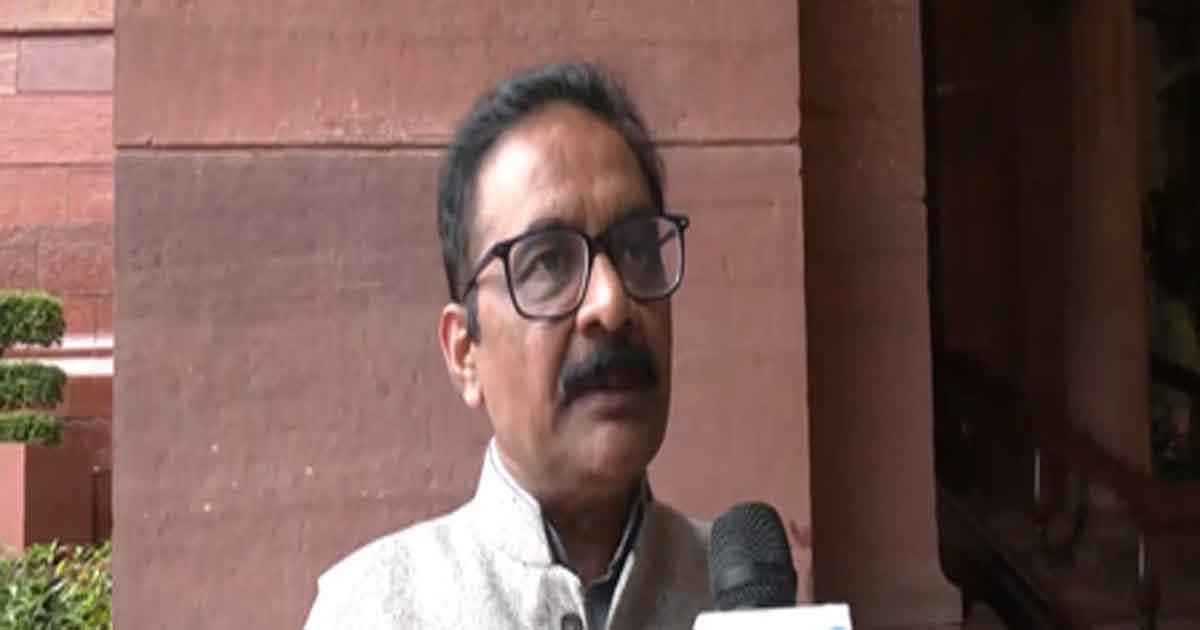
Photo: IANS
The BJP on Friday sought to ease concerns over the proposed introduction of charges on Unified Payments Interface (UPI) transactions, saying ordinary users would not be required to pay any fee and that the proposed charges would apply only to certain commercial transactions.
The clarification came a day after the Lok Sabha passed a Bill seeking to amend the Payment and Settlement Systems Act, 2007. The amendment would enable the government to permit banks and other payment service providers to levy charges on UPI and other notified electronic payment transactions.
Speaking to IANS, BJP MP Ashok Mittal said the proposed mechanism was not intended to burden ordinary users.
“First of all, I would like to clarify that charges on UPI are not being imposed on the common man. They will only apply to commercial transactions,” Mittal said, adding that the charges would be limited to certain business-related payments.
BJP Bihar President Sanjay Saraogi also sought to reassure users, pointing out that UPI has become an integral part of everyday transactions across the country.
“UPI has brought a digital revolution to India. Whether traders, street vendors or cart vendors, everyone has used UPI and contributed to the country's growth,” Saraogi said.
He added that the legislation only creates the legal framework and that the actual charges, if any, would depend on rules framed later.
“The extent of any charges and the manner in which they will be implemented will be decided later when the rules are framed. The RBI or the National Payments Corporation of India (NPCI) will have to take a decision on the matter,” he said.
Government says framework will determine charges
The proposed amendment removes an existing legal restriction on levying Merchant Discount Rate (MDR) on UPI and other notified electronic payment modes.
The change does not, by itself, establish a specific UPI fee or determine how much users or businesses would have to pay. The eventual structure would depend on the rules and regulatory framework introduced subsequently.
Supporters of the proposal argue that a sustainable revenue model is necessary to support banks, payment service providers and the infrastructure behind India’s rapidly expanding digital payments ecosystem.
JD(U) MLC Neeraj Kumar Singh defended the move, saying payment systems also need viable business models.
“If you want to make a transaction through UPI, what is wrong with paying a charge for it? If you have obtained a GST number for business purposes and want to carry out transactions, then you have to pay for the system,” he told IANS.
He argued that UPI was initially developed without charges as part of its expansion and that introducing a fee for certain commercial transactions should not necessarily be viewed as unreasonable.
Opposition raises concerns
The proposal, however, has faced criticism from Opposition leaders who fear that charges could eventually increase the cost of digital payments.
BSP MLA Satish Kumar Singh Yadav criticised the move, arguing that people were already facing multiple forms of taxation and that adding charges to UPI could further burden citizens.
The amendment was passed by the Lok Sabha amid Opposition protests and without a detailed discussion.
With UPI now deeply embedded in India’s payment ecosystem, the key issue will be how the proposed framework is eventually implemented and whether any charges remain restricted to commercial transactions or have wider implications for users and small businesses.




© Copyright
Reporter Post.All Rights Reserved |
Powered by: Aptilogic Software |
 |
Page rendered in 0.1125 seconds.
|
Page rendered in 0.1125 seconds.