Sun, October 11, 2026

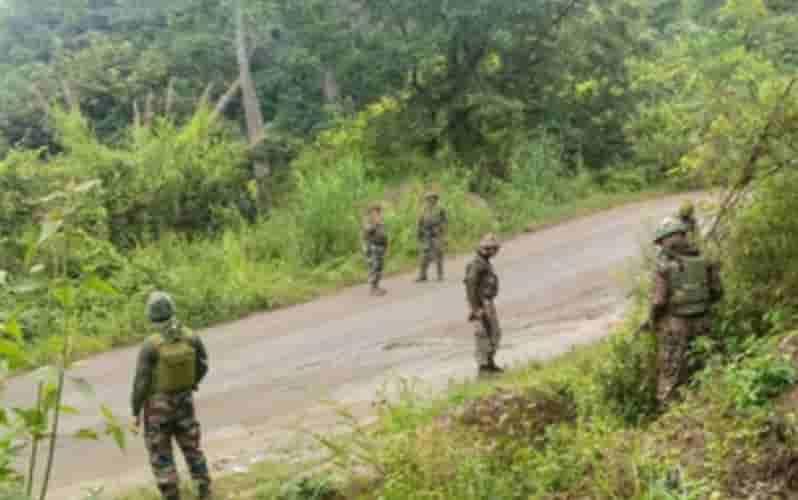
Representational Pic: IANS
Union Home Minister Rajnath Singh arrived in Jammu on Monday to inaugurate two pilot projects for high-tech “smart” border fencing under the Comprehensive Integrated Border Management System (CIBMS).
During his day-long visit, Singh is also scheduled to inspect forward areas along the International Border (IB) in Jammu and review border security arrangements.
“Leaving for Jammu on a day-long visit. Shall inaugurate two pilots under CIBMS in Jammu sector and also visit the forward areas near the International Border,” Singh said in a post on social media before leaving for Jammu.
The two pilot projects, each covering a 5.5-km stretch along the International Border, are designed to strengthen surveillance in areas where conventional fencing and physical monitoring are difficult.
The technology-driven system will create what officials describe as an invisible electronic barrier, capable of monitoring potential infiltration attempts across land and water and detecting threats associated with underground movement.
The CIBMS combines multiple surveillance technologies into an integrated network. These include thermal imagers, infrared and laser-based intruder alarms, aerostats for aerial surveillance and unattended ground sensors capable of detecting possible movement through tunnels.
The system also incorporates radars and sonar technology for monitoring riverine stretches, along with fibre-optic sensors. Data from these different surveillance devices will be transmitted in real time to an integrated command and control system, allowing security forces to respond more quickly to potential threats.
A Home Ministry official described CIBMS as a more comprehensive approach to border management that combines modern surveillance technology with the capabilities of security personnel.
“Based on integrated border management system, this virtual fence would be first of its kind initiative in India,” the official said.
The officer added that the system is particularly intended for border stretches where conventional physical surveillance is difficult because of challenging terrain, rivers or other geographical conditions.
The pilot projects in Jammu are expected to provide an opportunity to assess the effectiveness of the technology in real-world conditions before similar systems are considered for deployment along other vulnerable stretches of India's international borders.
The initiative is part of the government's broader efforts to modernise border management and strengthen the Border Security Force's ability to detect infiltration and other security threats, particularly in areas where maintaining a continuous physical presence is difficult.



© Copyright
Reporter Post.All Rights Reserved |
Powered by: Aptilogic Software |
 |
Page rendered in 0.01 seconds.
|
Page rendered in 0.01 seconds.