Sun, October 11, 2026

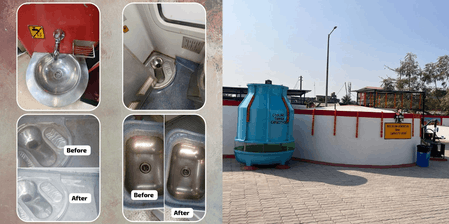
Representational Pic: IANS
Indian Railways is set to test Japanese bio-toilet technology at selected railway stations as part of a pilot project aimed at improving toilet hygiene and addressing persistent complaints about foul smells and poor maintenance.
Unlike the bio-toilets currently used by Indian Railways, the Japanese system uses sawdust and a specialised churning mechanism to break down human waste inside the toilet tank. Indian Railways' existing technology relies primarily on a bacteria-based decomposition process.
One Japanese bio-toilet is already operational at Madgaon station on the Konkan Railway route. Two more units are planned for installation at railway stations in Delhi and Varanasi.
Under the pilot programme, Japan will provide 150 bio-toilets free of cost. The units will be installed at railway stations rather than on trains, allowing the Railways to assess their performance under Indian operating and maintenance conditions.
An official said the wider adoption of Japanese technology would depend on the results of the pilot project.
Improving toilet facilities has become a significant challenge for Indian Railways, particularly because passengers on long-distance trains can spend 30 to 40 hours travelling. Poorly maintained toilets, foul smells and inadequate flushing have frequently been among the major complaints from passengers.
A 2017 report by the Comptroller and Auditor General of India (CAG) had noted foul smells emanating from 223 bio-toilets. Inspections found issues including problems with flushing mechanisms and inadequate water supply.
The Railways is also exploring hybrid bio-vacuum toilets, which combine bio-toilet technology with vacuum flushing. The national transporter is procuring 2,000 such hybrid toilets for 500 coaches and plans to expand their use depending on passenger response and operational performance.
Vacuum flushing can significantly reduce the amount of water required for each flush, potentially making the system more suitable for railway coaches where water conservation is an important operational consideration.
However, maintaining bio-toilets remains a challenge, with toilets often becoming clogged because of plastic bottles, sanitary napkins, litter and other non-biodegradable waste thrown into them.
The Railways has set a target of completing the installation of bio-toilets in all coaches by March 2019. The programme began with new coaches before bio-toilets were retrofitted into existing coaches at railway workshops in Parel in Mumbai, Bhopal and Jhansi.
For the current financial year, the Railways has set an ambitious target of installing 90,000 bio-toilets across 22,500 coaches, reflecting its broader effort to improve sanitation and passenger amenities across the network.



© Copyright
Reporter Post.All Rights Reserved |
Powered by: Aptilogic Software |
 |
Page rendered in 0.0112 seconds.
|
Page rendered in 0.0112 seconds.