Tue, October 13, 2026
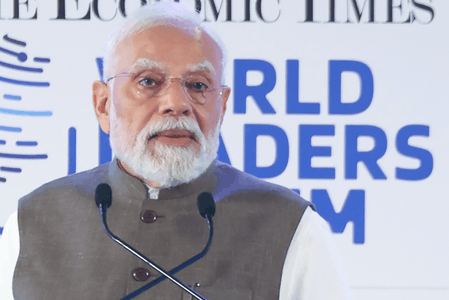
Photo: IANS
Prime Minister Narendra Modi on Saturday highlighted the significant contribution of women and young people to the Swachh Bharat Mission, saying public participation had been the key force behind the campaign's progress.
Launching the ‘Swachhata Hi Seva’ movement, Modi praised India's ‘Nari Shakti’ for its role in promoting cleanliness and improving sanitation across the country.
"The contribution of India's Nari Shakti (women power) in the Swachh Bharat Mission is immense," he said.
Modi also interacted with students from Assam through his NaMo App and described young people as important ambassadors of social change. He said the way youngsters had promoted the message of cleanliness demonstrated their ability to lead positive change in society.
With Gandhi Jayanti approaching on October 2, Modi urged citizens to renew their commitment to Mahatma Gandhi's vision of a clean India.
Highlighting the progress made under the Swachh Bharat Mission, the Prime Minister said sanitation coverage had crossed 90 per cent, compared with around 40 per cent four years earlier.
He attributed the achievement largely to public participation, saying the success of the cleanliness campaign could not be credited to the government alone.
According to Modi, more than nine crore toilets had been constructed across the country during the previous four years, while more than 4.5 lakh villages had been declared open-defecation free.
He also pointed to the declaration of more than 20 states and Union Territories as open-defecation free areas as an indication of the scale of the campaign.
However, Modi cautioned that building toilets alone would not make India clean. He stressed that cleanliness needed to become a daily habit and that sustained behavioural change was essential for the gains made under the campaign to continue.
The ‘Swachhata Hi Seva’ initiative therefore sought to move the cleanliness campaign beyond infrastructure creation and encourage citizens to take personal responsibility for maintaining public spaces and improving sanitation practices.
The emphasis on women, youth and community participation also reflects the government's broader approach of making cleanliness a people's movement rather than limiting it to a government programme.


© Copyright
Reporter Post.All Rights Reserved |
Powered by: Aptilogic Software |
 |
Page rendered in 0.0096 seconds.
|
Page rendered in 0.0096 seconds.