Sun, October 11, 2026

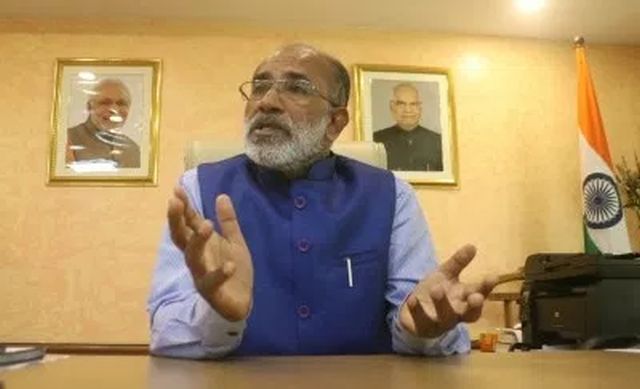
Representational image, credit: IANS
Union Tourism Minister K.J. Alphons has acknowledged that incidents of lynching have affected India's image, while asserting that the controversy over beef consumption has not significantly impacted the country's tourism industry.
Speaking to Indian journalists in Beijing on Tuesday, Alphons said incidents of lynching should not happen and noted that Prime Minister Narendra Modi had described those involved as criminals and asked state governments to take action, as law and order is a state subject.
Asked whether lynching incidents had affected tourism, Alphons said they had not done so on a large scale but acknowledged the damage to India's reputation.
“Anything happening like that is bad for the reputation of the country,” he said.
On whether restrictions on beef consumption had discouraged foreign tourists, the Minister rejected the suggestion, pointing out that states such as Kerala, Goa and several parts of the Northeast have large beef-consuming populations and are also major tourism destinations.
“People would go wherever they are comfortable,” he said, adding that the sentiments of people in different parts of the country should be respected.
India has witnessed several incidents of mob violence linked to allegations of cow slaughter and beef consumption. Cows are considered sacred by many Hindus.
Alphons was in China as part of an effort to attract more Chinese tourists to India. He inaugurated a tourism roadshow in Beijing and was scheduled to visit Shanghai and Wuhan.
He said that while 144 million Chinese tourists travelled abroad last year, only around 300,000 visited India.
India is targeting at least 14 million Chinese tourists over the next three years, he said.
On concerns about women's safety in India, which he identified as an important issue for potential Chinese visitors, Alphons described the matter as a “perception battle”.
He also criticised a recent Thomson Reuters survey that ranked India as the most unsafe country in the world for women, questioning the methodology behind the findings.
According to Alphons, the survey was based on responses from a small number of people, including only 43 respondents from India. He argued that such a limited sample could not accurately represent the safety situation across the country.



© Copyright
Reporter Post.All Rights Reserved |
Powered by: Aptilogic Software |
 |
Page rendered in 0.0098 seconds.
|
Page rendered in 0.0098 seconds.