Sun, August 02, 2026

By Nityanand Shukla
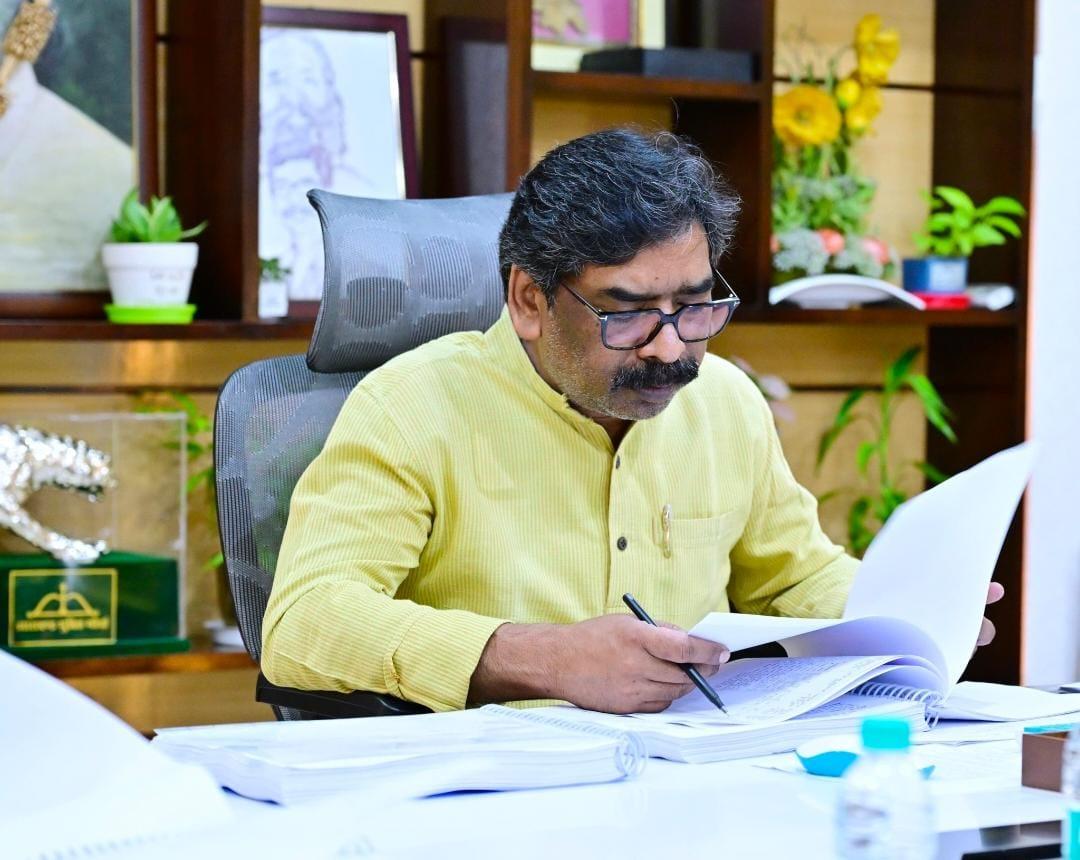
Ranchi: Over the past three years, the Jharkhand government led by Chief Minister Hemant Soren has transformed the celebration of International Day of the World's Indigenous Peoples (Adivasi Diwas) from a symbolic observance into one of the state's biggest official cultural events. Through large-scale government-backed programmes, recognition of tribal heroes, and promotion of indigenous art and traditions, the government has sought to position Jharkhand as the cultural capital of India's tribal heritage while strengthening the global identity of its indigenous communities.
The annual celebrations in Ranchi have steadily expanded in scale and official participation. Since 2022, the state has organised multi-day Jharkhand Adivasi Mahotsav events around August 9, bringing together thousands of tribal artists, artisans, musicians and performers from across Jharkhand. Traditional dance forms such as Paika, Jhumar, Chhau and Santhali performances, tribal fashion shows, exhibitions of indigenous handicrafts, local cuisines, literature and cultural seminars have become central attractions, drawing visitors from across the country.
In 2023, the celebrations witnessed greater public participation with Chief Minister Hemant Soren joining cultural programmes in traditional tribal attire and reiterating his government's commitment to protecting tribal identity, language, customs and religious traditions. The event showcased the diversity of Jharkhand's Scheduled Tribe communities and highlighted the contribution of tribal society to India's freedom struggle and nation-building.
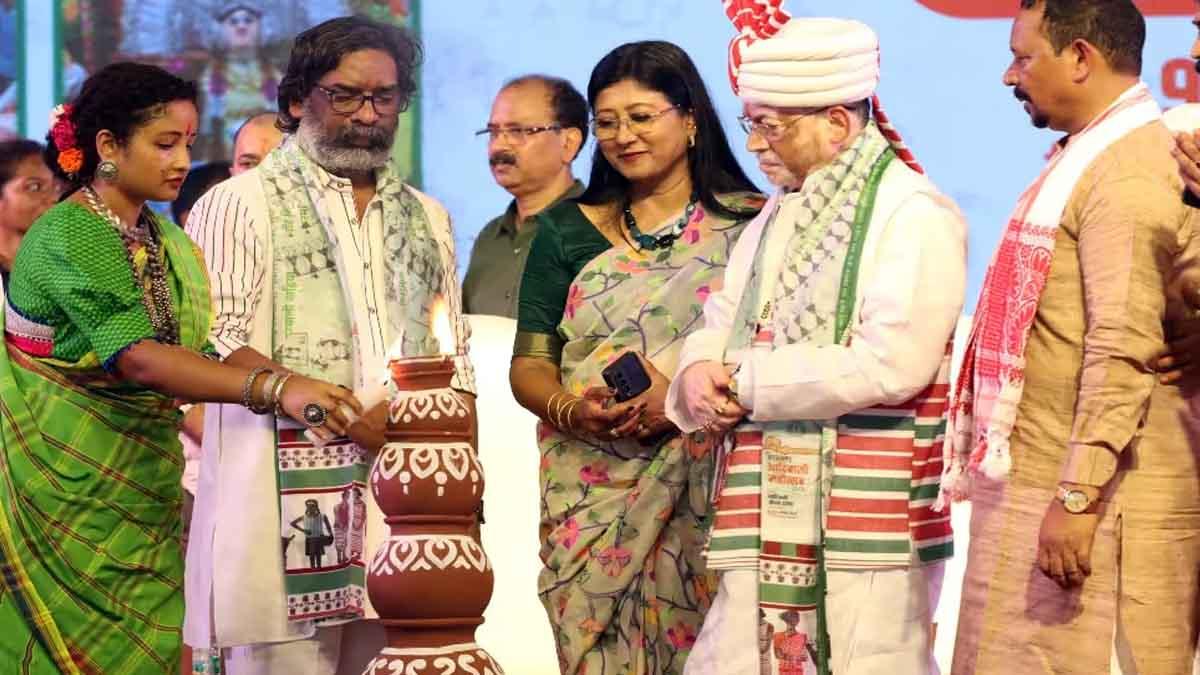
The 2024 edition, held at the Bhagwan Birsa Munda Memorial Park-cum-Museum in Ranchi, marked the third consecutive year of the state-sponsored festival in its expanded format. The two-day event featured cultural performances, exhibitions of tribal art and jewellery, food festivals, health camps and interactive sessions with artists. Addressing the gathering, Hemant Soren announced that his government would formulate a dedicated policy to promote tribal artists and preserve indigenous cultural traditions, recognising that artists are the custodians of Jharkhand's cultural heritage.
Beyond cultural programmes, the Soren government has consistently used Adivasi Diwas as a platform to honour legendary tribal leaders such as Birsa Munda, Sidho-Kanho, Tilka Manjhi, Phulo-Jhano, Nilamber-Pitamber and other icons whose contributions have often remained underrepresented in mainstream history. Official exhibitions, seminars and public outreach campaigns have sought to familiarise younger generations with the legacy of these leaders while projecting their role in India's anti-colonial struggle at the national level.
The government's broader cultural agenda has also focused on promoting tribal languages, preserving Sarna traditions, supporting folk artists, strengthening museums and memorials, and encouraging indigenous handicrafts through official platforms. These initiatives complement the annual Adivasi Diwas celebrations by integrating tribal heritage into mainstream governance and tourism.
Supporters of the government's initiatives argue that the expanded celebrations have given unprecedented visibility to Jharkhand's indigenous identity, creating opportunities for tribal artists, artisans and performers while presenting the state's rich cultural heritage before national and international audiences. As Adivasi Diwas continues to evolve into a flagship state event, Jharkhand is increasingly positioning itself as a leading voice for the recognition, preservation and celebration of indigenous culture in India and beyond.



| 14-09-2018 | ||||||
| Sl No. | Parameters | Actual Data(µg/m3) | Standard Limit(µg/m3) |
|---|---|---|---|
| 1 | PM 10 | 64 | 100 |
| 2 | PM 2.5 | 33 | 60 |
| 3 | SO2 | 55.3 | 80 |
| 4 | NO2 | 58.2 | 80 |
| 14-09-2018 | ||||||
| Station | Temperature(degree centigrade) | Rainfall(mm) | Relative humidity(%) | |||
|---|---|---|---|---|---|---|
| Max | Min | Past 24 hrs. | Since 1st March, 2018 | Max | Min | |
| Ranchi | 31.0 | 22.5 | 000.0 | 1010.1 | 95 | 66 |
| Jamshedpur | 34.1 | 26.2 | 000.0 | 1252.8 | 87 | 58 |
| Bokaro | 33.5 | 24.6 | 015.2 | 824.0 | 92 | 79 |
| Daltonganj | 32.6 | 24.9 | 004.2 | 960.9 | 95 | 67 |
© Copyright
Reporter Post.All Rights Reserved |
Powered by: Aptilogic Software |
 |
Page rendered in 0.0718 seconds.
|
Page rendered in 0.0718 seconds.