Tue, June 23, 2026





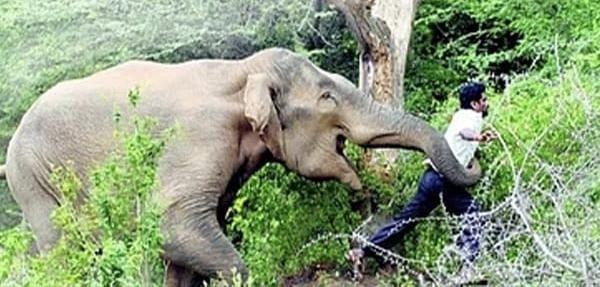
Ranchi: Human-elephant conflict is becoming an increasingly serious concern in Jharkhand, with incidents of wild elephants entering villages and damaging homes continuing to rise. The latest case was reported from Golgo village in the Domchanch police station area of Koderma district, where a herd of elephants entered at least six houses, causing extensive damage. Fortunately, no casualties were reported, though the incident has left residents living in fear.
According to official data, more than 474 people have lost their lives in elephant attacks across Jharkhand between 2020 and 2025. Over 150 others have been injured, with several suffering permanent disabilities. The figures highlight the growing intensity of the conflict between humans and elephants in the state.


### Worst-Affected Districts
The districts most severely impacted include Ranchi, Khunti, West Singhbhum (Chaibasa), East Singhbhum (Jamshedpur), Seraikela-Kharsawan, Gumla, Latehar, Bokaro, Dhanbad and, more recently, Koderma. The Ranchi division has recorded the highest number of human-elephant conflict incidents.
### Elephants Are Also Paying the Price
The conflict is taking a heavy toll not only on people but also on elephants. Many elephants have died after being electrocuted by overhead power lines or illegal electric traps, struck by trains, or injured by improvised explosive devices (IEDs) planted in forests. Wildlife experts warn that Jharkhand is gradually becoming an unsafe habitat for elephants as well.
### Compensation for Victims
The state government provides compensation through the Forest Department for deaths, injuries and property damage caused by elephant attacks. At present, the family of a person killed in an elephant attack receives Rs 4 lakh as compensation. However, the state Cabinet has approved a proposal to increase this amount to Rs 10 lakh.
Chief Minister Hemant Soren has recently directed officials to ensure that compensation reaches affected families within 10 days of an incident. The government is also working to deploy mobile veterinary units to provide timely treatment to injured elephants.

### Widespread Damage to Crops and Homes
Elephant herds frequently destroy standing crops such as paddy, mahua and sugarcane while searching for food. They often enter villages, raid homes for stored grain and damage walls, doors and other structures. Over the past five years, thousands of houses across Jharkhand have reportedly been damaged in elephant-related incidents.
### Why the Conflict Is Increasing
Wildlife experts attribute the growing conflict to illegal mining, deforestation and the disruption of natural elephant corridors. As forests shrink and food and water become scarce, elephants are increasingly venturing into human settlements in search of resources.
Experts warn that unless forests are protected, elephant corridors restored and conservation measures strengthened in conflict-prone areas, the human-elephant conflict in Jharkhand is likely to worsen in the coming years, posing an even greater threat to both people and wildlife.





| 14-09-2018 | ||||||
| Sl No. | Parameters | Actual Data(µg/m3) | Standard Limit(µg/m3) |
|---|---|---|---|
| 1 | PM 10 | 64 | 100 |
| 2 | PM 2.5 | 33 | 60 |
| 3 | SO2 | 55.3 | 80 |
| 4 | NO2 | 58.2 | 80 |
| 14-09-2018 | ||||||
| Station | Temperature(degree centigrade) | Rainfall(mm) | Relative humidity(%) | |||
|---|---|---|---|---|---|---|
| Max | Min | Past 24 hrs. | Since 1st March, 2018 | Max | Min | |
| Ranchi | 31.0 | 22.5 | 000.0 | 1010.1 | 95 | 66 |
| Jamshedpur | 34.1 | 26.2 | 000.0 | 1252.8 | 87 | 58 |
| Bokaro | 33.5 | 24.6 | 015.2 | 824.0 | 92 | 79 |
| Daltonganj | 32.6 | 24.9 | 004.2 | 960.9 | 95 | 67 |
© Copyright
Reporter Post.All Rights Reserved |
Powered by: Aptilogic Software |
 |
Page rendered in 0.0968 seconds.
|
Page rendered in 0.0968 seconds.