Thu, August 06, 2026


New Delhi: India's retail inflation is likely to edge up to 4.5 per cent in July 2026, driven by rising food prices, although improved vegetable supplies and a normal monsoon could help limit further price pressures, according to a Bank of Baroda report released on Thursday.
The report said inflationary pressures have become more widespread across essential commodities, with onions, edible oils, rice and pulses contributing significantly to the increase. However, better market arrivals of key vegetables and favourable monsoon conditions are expected to provide some relief in the coming months.
According to the report, core inflation—which excludes food and fuel prices—is expected to remain relatively stable at around 4 to 4.1 per cent. Softer international gold prices are likely to ease inflation in personal care and related segments, although rising input costs could put upward pressure on prices going forward.

The report highlighted that the bank's Essential Commodities Index (BoB ECI) recorded its sharpest annual increase on record in July 2026, rising 4.1 per cent year-on-year. The momentum continued into August, with the index climbing 5.4 per cent during the first five days of the month.
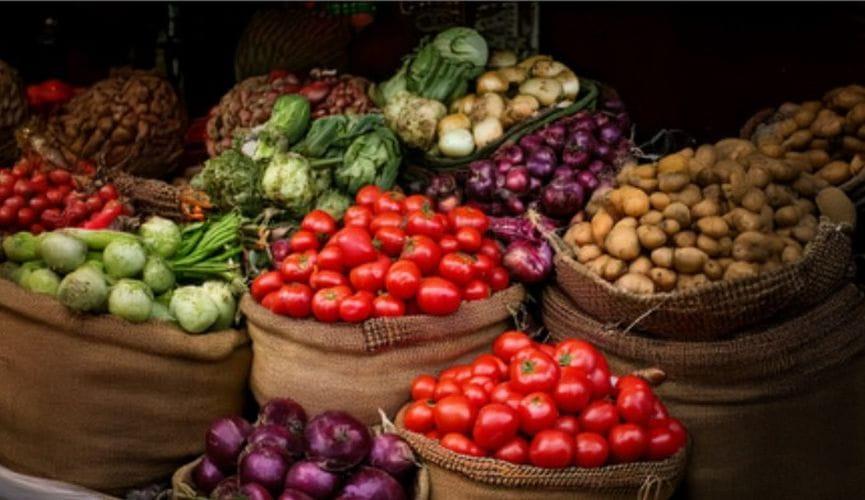
Among vegetables, the availability of tomatoes, onions and potatoes (TOP) has improved, helping moderate supply concerns despite onion prices remaining elevated.
The report also pointed out that international gold prices declined 3.7 per cent month-on-month, which could help contain core inflation. Inflation excluding precious metals is also expected to remain subdued for the time being.
On the agricultural front, the report noted encouraging monsoon progress, with 63 per cent of Indian states receiving normal rainfall. Sowing of major kharif crops, excluding oilseeds and sugarcane, was higher than the corresponding period last year as of July 31, 2026.
Additionally, easing international food prices, particularly for edible oils, are expected to provide some support.
Despite these positive factors, the report cautioned that inflation risks remain tilted to the upside. It said several companies, in their first-quarter earnings calls, indicated plans to pass on higher input costs to consumers amid strong demand, which could keep inflationary pressures elevated in the near term.
With inputs from IANS




| 14-09-2018 | ||||||
| Sl No. | Parameters | Actual Data(µg/m3) | Standard Limit(µg/m3) |
|---|---|---|---|
| 1 | PM 10 | 64 | 100 |
| 2 | PM 2.5 | 33 | 60 |
| 3 | SO2 | 55.3 | 80 |
| 4 | NO2 | 58.2 | 80 |
| 14-09-2018 | ||||||
| Station | Temperature(degree centigrade) | Rainfall(mm) | Relative humidity(%) | |||
|---|---|---|---|---|---|---|
| Max | Min | Past 24 hrs. | Since 1st March, 2018 | Max | Min | |
| Ranchi | 31.0 | 22.5 | 000.0 | 1010.1 | 95 | 66 |
| Jamshedpur | 34.1 | 26.2 | 000.0 | 1252.8 | 87 | 58 |
| Bokaro | 33.5 | 24.6 | 015.2 | 824.0 | 92 | 79 |
| Daltonganj | 32.6 | 24.9 | 004.2 | 960.9 | 95 | 67 |
© Copyright
Reporter Post.All Rights Reserved |
Powered by: Aptilogic Software |
 |
Page rendered in 0.0953 seconds.
|
Page rendered in 0.0953 seconds.