Tue, July 14, 2026

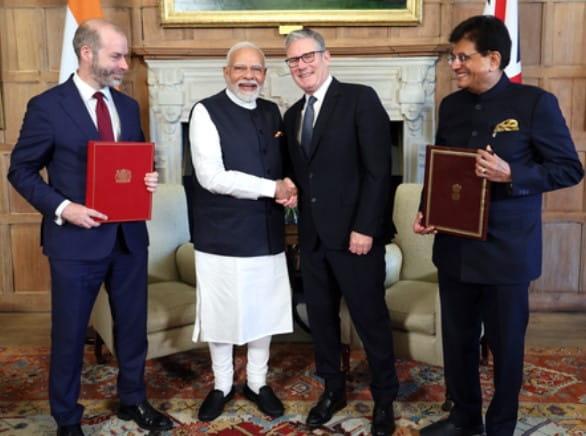
New Delhi: India has strengthened its trade regulations by amending the Foreign Trade Policy (FTP), 2023 to prohibit the import of goods that are produced or manufactured using forced labour. The move is aimed at reinforcing ethical trade practices and aligning the country's import policy with internationally accepted labour standards.
The Directorate General of Foreign Trade (DGFT) has introduced a new provision, Paragraph 2.20B, into the Foreign Trade Policy, authorising the Central Government to ban the import of products found to have been made, wholly or partially, through forced labour. The amended rules will come into effect 30 days after their publication in the Official Gazette.
Under the revised policy, the government will have the authority to identify and notify specific products for import restrictions based on the findings of an official inquiry or other relevant evidence.
To support the implementation of the new rules, the DGFT has established an inquiry mechanism to determine whether imported goods involve forced labour during their production. If sufficient evidence is found, the DGFT can recommend that the government prohibit the import of such products. The inquiry process will follow the procedures laid down in the Handbook of Procedures, 2023.
The amendment also formally defines "forced labour" by adopting the definition contained in the International Labour Organization's (ILO) Forced Labour Convention, 1930 (No. 29). According to the policy, forced labour means any work or service extracted from a person under the threat of penalty and undertaken without that person's voluntary consent.
The DGFT said the changes provide a clear legal framework to curb imports linked to forced labour while bringing India's Foreign Trade Policy in line with globally recognised labour standards.
The notification has been issued under the provisions of the Foreign Trade (Development and Regulation) Act, 1992, with the approval of the Minister of Commerce and Industry.
With inputs from IANS




| 14-09-2018 | ||||||
| Sl No. | Parameters | Actual Data(µg/m3) | Standard Limit(µg/m3) |
|---|---|---|---|
| 1 | PM 10 | 64 | 100 |
| 2 | PM 2.5 | 33 | 60 |
| 3 | SO2 | 55.3 | 80 |
| 4 | NO2 | 58.2 | 80 |
| 14-09-2018 | ||||||
| Station | Temperature(degree centigrade) | Rainfall(mm) | Relative humidity(%) | |||
|---|---|---|---|---|---|---|
| Max | Min | Past 24 hrs. | Since 1st March, 2018 | Max | Min | |
| Ranchi | 31.0 | 22.5 | 000.0 | 1010.1 | 95 | 66 |
| Jamshedpur | 34.1 | 26.2 | 000.0 | 1252.8 | 87 | 58 |
| Bokaro | 33.5 | 24.6 | 015.2 | 824.0 | 92 | 79 |
| Daltonganj | 32.6 | 24.9 | 004.2 | 960.9 | 95 | 67 |
© Copyright
Reporter Post.All Rights Reserved |
Powered by: Aptilogic Software |
 |
Page rendered in 0.1122 seconds.
|
Page rendered in 0.1122 seconds.