Sat, May 23, 2026

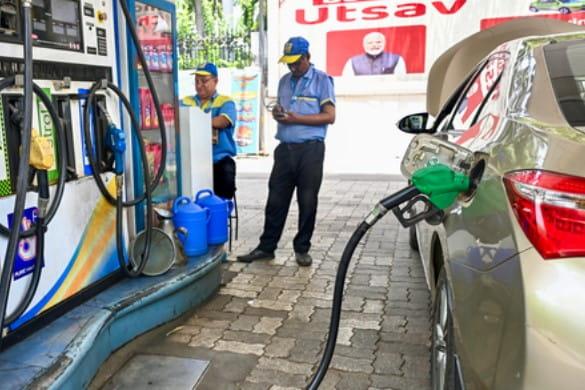
New Delhi- The Central government’s decision to reduce the special additional excise duty (SAED) on petrol and diesel in March this year has resulted in an estimated revenue loss of nearly Rs 30,000 crore for the exchequer in the current financial year, according to sources.
The excise duty reduction, announced on March 27, 2026 amid disruptions around the Strait of Hormuz, lowered petrol excise duty to Rs 3 per litre while effectively bringing diesel excise duty down to zero. Sources said the move was aimed at protecting consumers from rising global crude oil prices, with the government choosing to absorb the financial impact instead of passing the burden on to the public.
The development comes amid criticism from the Congress, which has argued that petrol prices have risen sharply from around Rs 71 per litre in May 2014 to nearly Rs 98 per litre now, accusing the government of excessive taxation.
However, sources pointed out that the comparison overlooks the context behind fuel pricing during the previous UPA regime. They noted that between 2005 and 2010, the UPA government had issued nearly Rs 1.34 lakh crore worth of oil bonds to public sector oil marketing companies instead of allowing fuel price revisions in line with market rates.
According to sources, those bonds effectively shifted the financial burden to future governments and taxpayers rather than reflecting the true cost of fuel at the time.
The current government, led by Prime Minister Narendra Modi, has since been repaying those liabilities. Sources stated that repayments amounted to around Rs 10,000 crore in FY 2021-22, Rs 31,150 crore in FY 2023-24, Rs 52,860 crore in FY 2024-25, and Rs 36,913 crore in FY 2025-26, apart from substantial interest payments accumulated over the years.
Sources further argued that the present government’s approach to handling fuel price shocks has been fundamentally different. Instead of deferring liabilities through bonds, excise duties on petrol and diesel were directly reduced during periods of high crude prices in 2022 and again in 2026.
They emphasised that the tax cuts were transparent, reflected immediately in retail fuel prices, and funded directly through reduced government revenue without creating additional future liabilities for taxpayers.
With inputs from IANS




| 14-09-2018 | ||||||
| Sl No. | Parameters | Actual Data(µg/m3) | Standard Limit(µg/m3) |
|---|---|---|---|
| 1 | PM 10 | 64 | 100 |
| 2 | PM 2.5 | 33 | 60 |
| 3 | SO2 | 55.3 | 80 |
| 4 | NO2 | 58.2 | 80 |
| 14-09-2018 | ||||||
| Station | Temperature(degree centigrade) | Rainfall(mm) | Relative humidity(%) | |||
|---|---|---|---|---|---|---|
| Max | Min | Past 24 hrs. | Since 1st March, 2018 | Max | Min | |
| Ranchi | 31.0 | 22.5 | 000.0 | 1010.1 | 95 | 66 |
| Jamshedpur | 34.1 | 26.2 | 000.0 | 1252.8 | 87 | 58 |
| Bokaro | 33.5 | 24.6 | 015.2 | 824.0 | 92 | 79 |
| Daltonganj | 32.6 | 24.9 | 004.2 | 960.9 | 95 | 67 |
© Copyright
Reporter Post.All Rights Reserved |
Powered by: Aptilogic Software |
 |
Page rendered in 0.093 seconds.
|
Page rendered in 0.093 seconds.