Thu, October 15, 2026


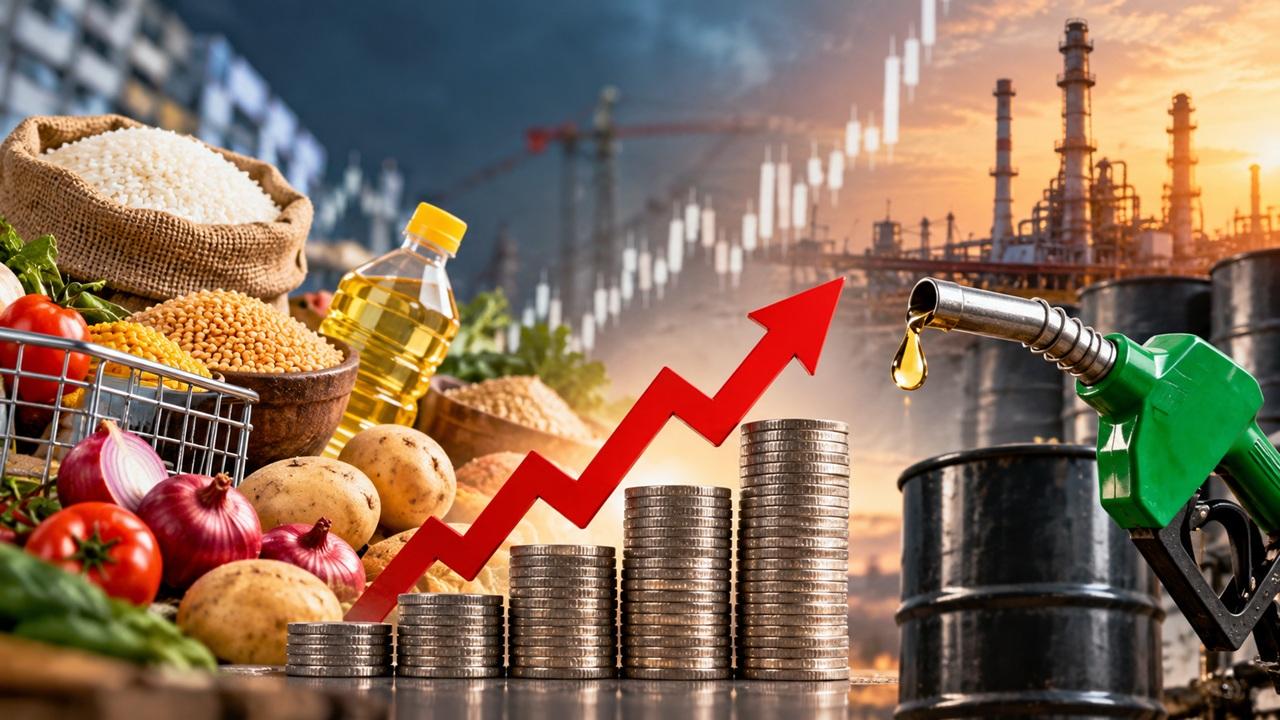
New Delhi — The recent increase in global crude oil prices is not expected to have a major impact on inflation in India at present, Finance Minister Nirmala Sitharaman told Parliament on Monday.
Responding to a question in the Lok Sabha, Sitharaman said India’s inflation currently remains close to the lower bound of the tolerance band set by the Reserve Bank of India (RBI), which limits the immediate impact of rising oil prices.
She noted that the price of crude oil imported by India had been declining over the past year until geopolitical tensions escalated in West Asia on February 28, 2026.
“Between the end of February and March 2, 2026, the price of the Indian basket of crude oil increased from $69.01 per barrel to $80.16 per barrel. Since India’s inflation is near the lower bound, the impact on inflation is not expected to be substantial at this stage,” the minister said.
Global crude prices surged after military strikes by the United States and Israel on Iran triggered a wider conflict in the Middle East, with Tehran responding through drone and missile attacks on US bases in the region.
Citing the RBI’s Monetary Policy Report of October 2025, Sitharaman said that if crude oil prices rise by 10 per cent above baseline assumptions and the increase is fully passed on to domestic prices, inflation could increase by about 30 basis points.
She added that the medium-term impact of higher crude prices would depend on factors such as exchange rate movements, global supply-demand conditions, monetary policy transmission, the overall inflation environment and the extent of indirect price pass-through.
According to the minister, average retail inflation, measured by the Consumer Price Index (CPI), declined from 5.4 per cent in 2023-24 to 4.6 per cent in 2024-25, and further to 1.8 per cent during 2025-26 (April–January).
Headline inflation in January 2026 stood at 2.75 per cent, close to the lower bound of the RBI’s target band of 2–6 per cent with a 4 per cent midpoint.
Sitharaman also pointed out that the RBI’s Monetary Policy Committee (MPC) has reduced the policy rate by 125 basis points cumulatively since February 2025 as part of inflation management efforts.
The government has also taken multiple measures to contain price pressures, including increasing buffer stocks of essential food items, selling procured grains in the open market, facilitating imports during shortages and imposing export restrictions when necessary.
Additionally, fiscal steps such as income tax exemption for annual incomes up to ?12 lakh (?12.75 lakh for salaried individuals) and reductions in Goods and Services Tax (GST) rates have been implemented to boost purchasing power and ease the burden on consumers, she added.
With inputs from IANS



© Copyright
Reporter Post.All Rights Reserved |
Powered by: Aptilogic Software |
 |
Page rendered in 0.0121 seconds.
|
Page rendered in 0.0121 seconds.