Thu, October 15, 2026

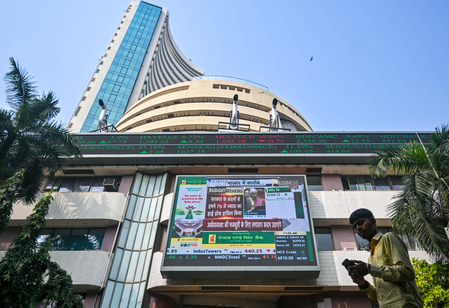
Mumbai - Rising hostilities between Israel and Iran are expected to weigh on Indian equity markets in the near term, primarily due to concerns over higher energy prices, market analysts said on Sunday.
According to experts, sectors such as oil marketing companies, aviation, paints, automobiles, consumer discretionary and logistics stocks may come under pressure as tensions escalate in the Middle East.
Analysts noted that the immediate market response is likely to be cautious to negative, as investors evaluate whether the conflict could evolve into a prolonged confrontation or remain short-lived. Historically, heightened geopolitical uncertainty tends to trigger risk aversion and selling pressure in equity markets.
Crude oil prices have firmed amid fears of potential supply disruptions through the Strait of Hormuz, with prices hovering around $67–$68 per barrel, up nearly 2 per cent. Market participants warned that a sustained rise above $80 per barrel could significantly strain India’s macroeconomic outlook, fuel inflation and compress corporate profit margins, given the country’s heavy dependence on oil imports.
However, analysts pointed out that energy and defence stocks could see near-term support, while traditional safe-haven assets such as gold, silver and US Treasurys may attract increased inflows.
Meanwhile, political uncertainty in Iran has deepened following the death of its Supreme Leader Ayatollah Ali Khamenei. His second eldest son, Mojtaba Khamenei, is being seen as a potential successor, according to multiple reports.
On the technical front, experts observed that the Nifty 50 has weakened after closing below its 200-day exponential moving average (EMA). Immediate resistance for the index is placed in the 25,300–25,350 range, while strong support is seen around 25,000–25,050.
“If the index manages to hold above the support zone, some stability could return. However, a clear break below this level may lead to further downside,” analysts said.
With Indian markets closed on account of Holi, the weekly Nifty expiry has been shifted to Monday, shortening the trading week. Market watchers cautioned that such calendar adjustments often intensify short-term positioning and could keep volatility elevated.
With inputs from IANS



© Copyright
Reporter Post.All Rights Reserved |
Powered by: Aptilogic Software |
 |
Page rendered in 0.0134 seconds.
|
Page rendered in 0.0134 seconds.