
Mon, October 19, 2026


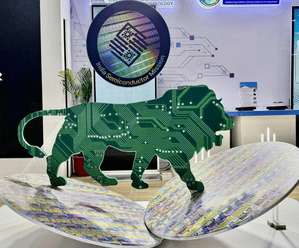
New Delhi: The government on Friday approved 22 new proposals under the Electronics Components Manufacturing Scheme (ECMS), a move expected to attract investments worth Rs 41,863 crore and generate nearly 37,000 direct and indirect jobs. The initiative is aimed at strengthening domestic supply chains and reducing India’s dependence on imports for critical electronic components.
The combined output from these 22 projects is estimated at Rs 2.58 lakh crore. The approved proposals include applications from major industry players such as Dixon, Samsung Display Noida Pvt Ltd, Foxconn’s Yuzhan Technology India Pvt Ltd, and Hindalco Industries.
These approvals are in addition to 24 proposals cleared earlier under the scheme, which involved investments amounting to Rs 12,704 crore.
According to the Ministry of Electronics and Information Technology (MeitY), the latest round of approvals spans manufacturing across 11 segments, covering mobile phones, telecom equipment, consumer electronics, strategic electronics, automotive electronics, and IT hardware. The projects will be established across eight states — Andhra Pradesh, Haryana, Karnataka, Madhya Pradesh, Maharashtra, Tamil Nadu, Uttar Pradesh, and Rajasthan.
Industry leaders welcomed the development, stating that the progress of the ECMS underscores India’s transition from policy intent to on-ground execution in electronics manufacturing.
Ashok Chandak, President of IESA and SEMI India, said that as 2025 draws to a close, India has earned global confidence as a credible and investible destination for Electronics System Design and Manufacturing (ESDM). He described ECMS as a transformative initiative, noting that a robust ecosystem requires strong capabilities in components, materials, and value addition, not just semiconductors.
He further emphasised that the next phase should focus on scaling operations, building strong design teams, enhancing local sourcing, and ensuring world-class manufacturing quality. Chandak also highlighted the need for original equipment manufacturers (OEMs) and system companies to actively adopt Made-in-India components, stressing that demand creation is as vital as supply creation. Distributors, he added, will play a key role in integrating Indian components into domestic and global supply chains.
To deepen the electronics value chain, the government launched the ECMS in 2025. The scheme focuses on promoting domestic manufacturing of printed circuit boards, electrical and mechanical components, camera modules, and other key electronics inputs.
India has emerged as a major electronics manufacturing hub, driven by sustained policy support. Over the past 11 years, electronics manufacturing in the country has grown nearly six-fold, rising from Rs 1.9 lakh crore in 2014–15 to Rs 11.32 lakh crore in 2024–25.
With inputs from IANS





© Copyright
Reporter Post.All Rights Reserved |
Powered by: Aptilogic Software |
 |
Page rendered in 0.0099 seconds.
|
Page rendered in 0.0099 seconds.