Sun, September 13, 2026

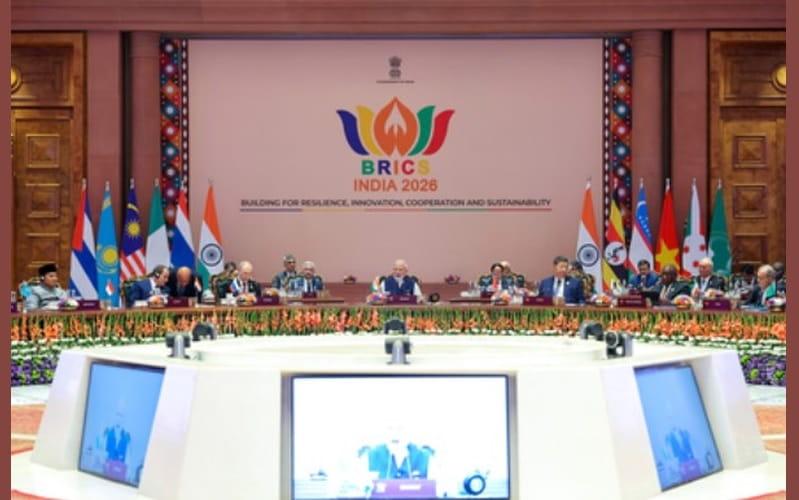
Photo: IANS
The successful conclusion of the 18th BRICS Summit in New Delhi has drawn significant attention from international media, with leading newspapers and publications highlighting India's role in steering the grouping amid growing geopolitical tensions and divisions among member countries.
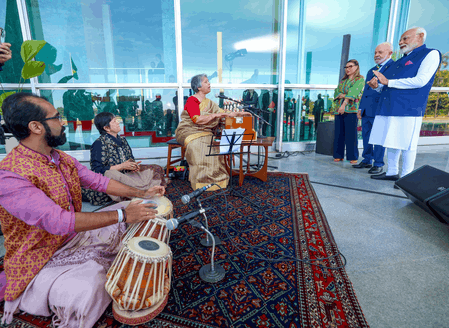
India is hosting the two-day summit at Bharat Mandapam under its BRICS chairship, with leaders of the expanded grouping discussing global conflicts, trade, energy security, supply chains and the future direction of the bloc.
Japan Times reported that Prime Minister Narendra Modi achieved a significant diplomatic breakthrough by bringing BRICS members with differing positions closer to a strongly worded joint statement on the escalating situation in the Middle East.
According to the report, the 10 full members and Saudi Arabia stopped short of directly naming countries in their declaration but called for restraint and urged all sides to avoid actions that could further worsen the situation. The declaration also expressed serious concern over attacks on civilian infrastructure and nuclear facilities.
The report highlighted the challenge facing the BRICS grouping as it attempts to maintain consensus despite differences among its members on major geopolitical issues.
Russian state-run news agency TASS, meanwhile, focused on Prime Minister Modi's call for BRICS to adopt an ambitious 20-year vision. In his opening remarks at the leaders' meeting, Modi described BRICS as having reached a "coming of age" and stressed the need to convert consensus within the grouping into concrete outcomes.
Modi also underlined the importance of creating mechanisms that ensure continuity and effective implementation of decisions taken by BRICS members.
International broadcaster Al Jazeera highlighted the joint declaration's call for restraint in the Middle East and its emphasis on protecting global trade, supply chains and energy flows.
The report noted that New Delhi assumed the BRICS presidency at a particularly challenging time, with conflicts in the Middle East and Ukraine affecting energy markets and shipping routes, while tariffs and differences among member countries have added to the uncertainty facing the global economy.
The BRICS Business Forum also emerged as an important component of India's chairship. According to Eurasia Review, the forum brought together business leaders, ministers and heads of state to discuss trade, investment, finance, technology and development challenges confronting BRICS economies.
The forum also considered recommendations from the BRICS Business Council, particularly in areas such as intra-BRICS trade, investment, the digital economy, micro, small and medium enterprises, standards cooperation and integration of global value chains.
The summit also attracted considerable attention in the United States, where major newspapers viewed the gathering against the backdrop of changing global alliances and growing competition between Washington and Beijing.
The New York Times, in a report from New Delhi, focused on the question of whether Prime Minister Modi or Chinese President Xi Jinping would emerge as the more influential voice representing the developing world.
The Wall Street Journal, meanwhile, reported that uncertainty in India's and China's relationships with the United States had created an opportunity for the two Asian powers to ease tensions and explore areas of common ground.
The international coverage reflects the growing importance being attached to BRICS as the grouping expands its membership and seeks a larger role in global economic and geopolitical affairs. India's ability to maintain dialogue among countries with divergent interests and push for consensus has consequently emerged as one of the key themes of the New Delhi summit.



© Copyright
Reporter Post.All Rights Reserved |
Powered by: Aptilogic Software |
 |
Page rendered in 0.0094 seconds.
|
Page rendered in 0.0094 seconds.