Mon, August 17, 2026

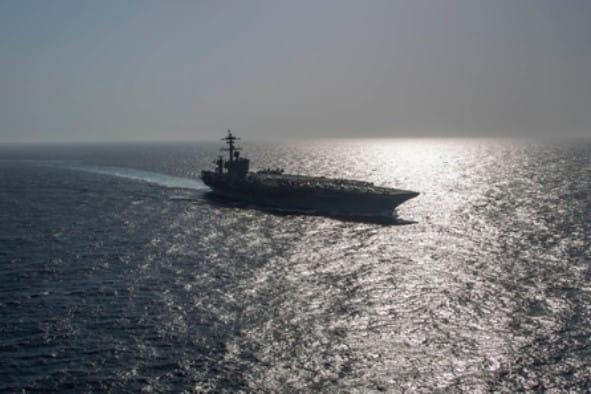
Photo: IANS
Former US Joint Chiefs of Staff Chairman Admiral Mike Mullen has warned that prolonged military deployments are placing heavy pressure on service members and could undermine the US military's future readiness, amid growing concerns over conditions aboard the USS Abraham Lincoln during the Iran war.
Mullen said on Sunday that deployments lasting around a year were too long and could take a significant toll on naval personnel, ships and their families. He cautioned that maintaining forces at sea for extended periods could effectively consume future operational readiness.
“You wear yourself out. You actually start to cash in future readiness significantly,” Mullen told ABC News.
The USS Abraham Lincoln has spent 268 days at sea, while its approximately 5,000 sailors and Marines have reportedly gone more than 200 consecutive days without a port call. The aircraft carrier has been involved in US combat operations in the Middle East and supported the blockade of the Strait of Hormuz.
Reports have raised concerns about exhaustion, declining morale and mental health pressures among personnel aboard the carrier. However, President Donald Trump has dismissed concerns that the deployment had lasted too long.
Mullen said carriers normally make periodic port visits, allowing crews to rest while also giving the Navy an opportunity to carry out maintenance. Those options have become more difficult because ports traditionally used by the US Navy in Bahrain and the United Arab Emirates came under threat during the conflict with Iran.
He also pointed to Iran's targeting of Diego Garcia as another factor that complicated efforts to identify a secure location for a port visit.
“So, there just isn't an easy place to go in terms of a port visit,” Mullen said.
The retired admiral said he had spoken with US Central Command chief Admiral Brad Cooper, who had visited the Lincoln. According to Mullen, Cooper said several problems had emerged during the early part of the deployment but had subsequently been addressed.
Mullen nevertheless stressed that morale would require continued attention. At the same time, he praised the carrier's crew for maintaining its performance during sustained combat operations.
“These crews will do absolutely everything to make sure the mission goes well. And they clearly have done that on Lincoln,” he said.
The USS George Washington is expected to relieve the Abraham Lincoln. Cooper has reportedly told the Lincoln's crew that they will be returning home, although no specific date has been announced.
Mullen said even knowing that relief is coming can have a significant impact on morale. “The uplift in morale when you have that, even if they don't have an exact date, you know you've got a relief,” he said.
The former JCS chairman also raised a broader concern about the size of the US carrier fleet. The Navy currently operates 11 aircraft carriers, but Mullen argued that the fleet may need to expand if Washington intends to maintain deployments at the current pace.
“We actually need more, I think, in the current environment if we're going to deploy them like this,” he said.
Mullen's comments highlight a wider challenge facing the US military: balancing sustained combat operations with the need to preserve personnel welfare, ship maintenance and long-term readiness. While crews can continue operating under intense pressure, prolonged deployments without adequate rest and maintenance can place additional strain on the force's ability to sustain operations over the long term.



© Copyright
Reporter Post.All Rights Reserved |
Powered by: Aptilogic Software |
 |
Page rendered in 0.0697 seconds.
|
Page rendered in 0.0697 seconds.