Tue, August 04, 2026


New York: Iran and Oman are in talks to establish a single two-way shipping route through the strategically vital Strait of Hormuz, a move that could help restore maritime traffic through one of the world's most important energy corridors.
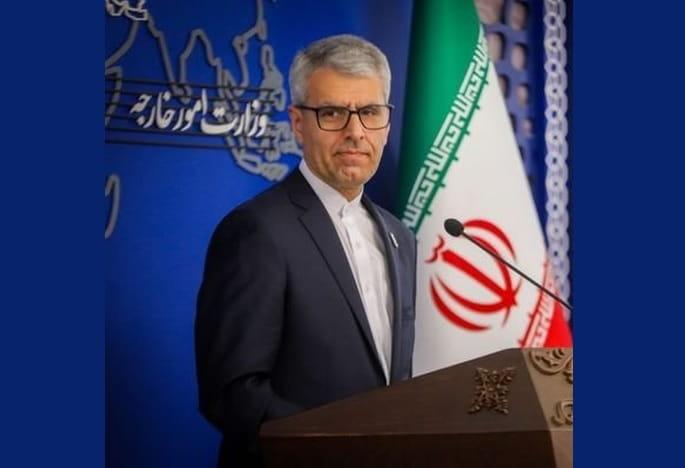
Speaking at a press briefing in Tehran, Iranian Foreign Ministry spokesperson Esmaeil Baqaei said the proposal aims to replace the existing multiple shipping lanes with a single intermediate corridor that addresses the security and navigational concerns of both Iran and Oman.
According to Iran's state-run IRNA news agency, the discussions focus on replacing the current northern and southern routes with a unified corridor until both countries agree on a permanent alternative to the existing Traffic Separation Scheme (TSS).
Oman, however, has not publicly confirmed or denied that such negotiations are underway.
If implemented, the proposed arrangement could significantly ease disruptions to global energy supplies, as the Strait of Hormuz remains a critical passage for international oil and gas shipments.
Baqaei also dismissed claims that the United States is involved in the negotiations, contradicting recent remarks by US President Donald Trump, who had suggested discussions with Iran were taking place on reopening the waterway.
The Strait has remained largely closed since the February conflict involving Iran, Israel and the US, with only limited ship movements reported. Iran has reportedly mined parts of the waterway and targeted vessels attempting to pass, while the US has enforced a blockade on Iranian ports and taken action against ships defying it.

The current Traffic Separation Scheme, adopted by the International Maritime Organization in 1968 based on a joint proposal by Iran and Oman, designates separate two-mile-wide lanes for inbound and outbound maritime traffic. The IMO has since advised ships to avoid the designated routes because of reported mine threats.
Media reports citing unnamed officials have suggested the proposed plan would function like a highway, with inbound vessels using a lane closer to the Iranian coast and outbound ships travelling nearer to Omani waters.
Baqaei, however, criticised the earlier US-backed southern route through Omani waters, saying it conflicted with a June memorandum of understanding between Iran and the US and raised environmental as well as national security concerns.
Reports have also suggested Iran could collect service fees from ships using its side of the corridor without formally imposing transit tolls, though Baqaei did not directly address the issue during the briefing.
With inputs from IANS




| 14-09-2018 | ||||||
| Sl No. | Parameters | Actual Data(µg/m3) | Standard Limit(µg/m3) |
|---|---|---|---|
| 1 | PM 10 | 64 | 100 |
| 2 | PM 2.5 | 33 | 60 |
| 3 | SO2 | 55.3 | 80 |
| 4 | NO2 | 58.2 | 80 |
| 14-09-2018 | ||||||
| Station | Temperature(degree centigrade) | Rainfall(mm) | Relative humidity(%) | |||
|---|---|---|---|---|---|---|
| Max | Min | Past 24 hrs. | Since 1st March, 2018 | Max | Min | |
| Ranchi | 31.0 | 22.5 | 000.0 | 1010.1 | 95 | 66 |
| Jamshedpur | 34.1 | 26.2 | 000.0 | 1252.8 | 87 | 58 |
| Bokaro | 33.5 | 24.6 | 015.2 | 824.0 | 92 | 79 |
| Daltonganj | 32.6 | 24.9 | 004.2 | 960.9 | 95 | 67 |
© Copyright
Reporter Post.All Rights Reserved |
Powered by: Aptilogic Software |
 |
Page rendered in 0.0721 seconds.
|
Page rendered in 0.0721 seconds.