Mon, October 19, 2026


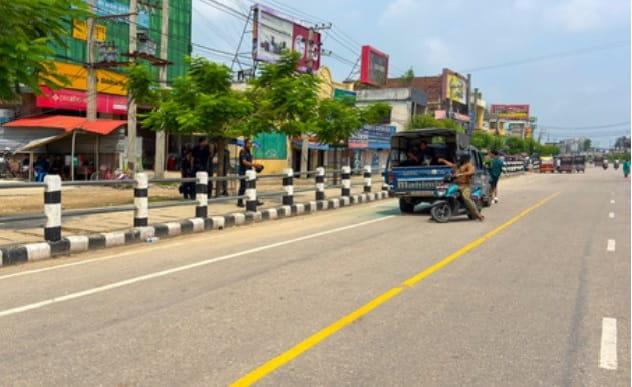
Kathmandu: Authorities in Nepal have imposed an indefinite curfew in parts of the southern districts of Siraha and Sunsari following communal violence between Hindu and Muslim groups, amid fears that the unrest could spread across the Madhesh province. Both districts share a border with the Indian state of Bihar.
The District Administration Office (DAO) in Siraha enforced the curfew from 2 p.m. local time on Thursday until further notice after assessing that protests and fresh violence could threaten public order.
According to the administration, the restrictions cover a large area stretching along the East-West Highway, with officials warning that anyone violating the curfew would face legal action.
A curfew imposed earlier in parts of Sunsari also remained in force on Thursday.
The violence began on July 26 in the Kaptanganj area of Dewanganj Rural Municipality in Sunsari district. According to police, the clash erupted when Hindu devotees carrying holy water for the Bolbam festival during the month of Sawan passed through the area while playing loud DJ music. Some members of the Muslim community objected to the loud music, leading to an argument that quickly escalated into a violent confrontation.
Police said large groups from both communities gathered with sticks, stones, bamboo poles and iron rods, forcing security personnel to intervene. During the operation, a youth identified as Om Prakash Mehta was killed after being struck by police gunfire.
Although the situation has improved, security officials said tensions remain high and fresh violence cannot be ruled out.
"The situation remains vulnerable. That's why the curfew remains in place," Senior Superintendent of Police Prabhu Prasad Dhakal, spokesperson for the Madhesh Province Police Office, told IANS.
The curfew in Sunsari covers several municipalities and rural municipalities, including Inaruwa, Duhabi, Dewanganj, Harinagar, Koshi, Gadhi, Bhokraha Narsingh and Barju. Restrictions have also been imposed in selected wards of Itahari Sub-metropolitan City and Ramdhuni Municipality along the Mahendra Highway.
Meanwhile, Nepal's National Security Council, chaired by Prime Minister Balendra Shah, reviewed the country's security situation on Thursday, with particular focus on the recent violence in Sunsari.
According to a statement issued after the meeting, the council decided to strengthen coordination among security agencies, political leaders and other stakeholders to maintain peace, protect communal harmony and prevent similar incidents in the future. It was informed that the situation in Sunsari is gradually returning to normal through the combined efforts of local authorities, political parties and security forces.
The council also resolved to improve coordination among government agencies for quicker disaster response, including search, rescue and relief operations.
Separately, Nepal's Kantipur daily reported, citing a confidential report prepared by the Armed Police Force (APF) three years ago, that the force had warned the government about organised attempts to fuel religious and ethnic divisions in the Tarai region. The report reportedly recommended immediate political and administrative intervention, but its findings were largely ignored by the country's leadership.
With inputs from IANS



© Copyright
Reporter Post.All Rights Reserved |
Powered by: Aptilogic Software |
 |
Page rendered in 0.0073 seconds.
|
Page rendered in 0.0073 seconds.