Fri, October 09, 2026
Representational image IANS
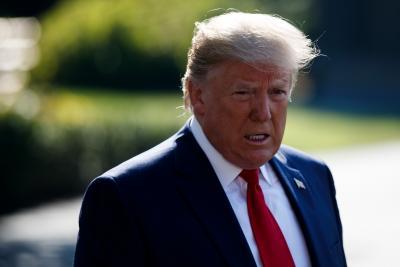
US President Donald Trump has threatened to withdraw the US from the World Trade Organisation (WTO) if the organisation fails to change what he described as its unfair treatment of America.
"If they don't shape up, I would withdraw from the WTO," the BBC quoted Trump as saying in an interview with Bloomberg News on Friday.
The WTO was established to set rules for international trade and provide a mechanism for resolving trade disputes between countries. Trump, who has pursued protectionist trade policies, has repeatedly accused the organisation of treating the US unfairly.
Trump's latest warning highlights the growing tension between his trade policies and the rules-based global trading system overseen by the WTO.
The US has also blocked the appointment of new judges to the WTO's dispute settlement system, a move that could eventually hinder the body's ability to issue rulings on trade disputes.
Trump has criticised the WTO since before taking office. In 2017, he told Fox News that the organisation was intended to benefit all countries but the US and claimed that Washington lost most of its cases before the WTO.
Meanwhile, the US has been involved in trade disputes with several countries, with its confrontation with China attracting particular attention as the world's two largest economies compete for greater global influence.
Trump has imposed tariffs on several categories of goods imported into the US. A third round of tariffs covering $200 billion worth of Chinese goods could be introduced after the completion of a public-comment period, according to a BBC report.
Asked whether the report was accurate, Trump said it was "not totally wrong".
China's Commerce Ministry has accused the US of potentially violating WTO rules. Beijing filed its first complaint with the WTO in July after Trump imposed the initial round of tariffs on Chinese imports.
Established in 1994, the WTO is at the centre of the international rules governing global trade. It provides a forum for resolving disputes between countries and negotiating agreements aimed at reducing trade barriers.



© Copyright
Reporter Post.All Rights Reserved |
Powered by: Aptilogic Software |
 |
Page rendered in 0.0119 seconds.
|
Page rendered in 0.0119 seconds.