Wed, November 18, 2026

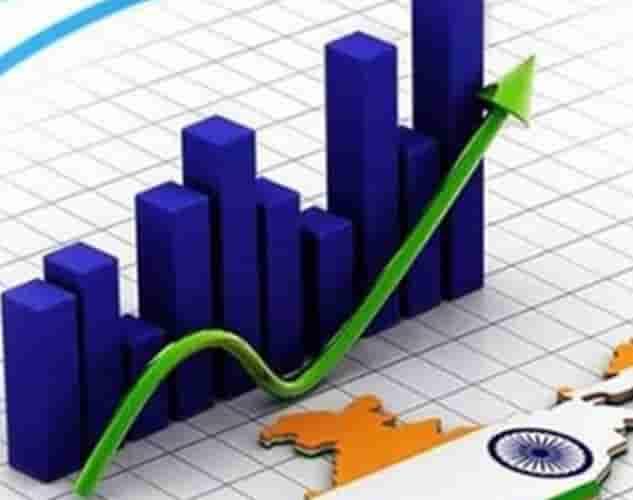
Photo: IANS
New Delhi: India has emerged as the world's most resilient major economy for the 2026-30 period, outperforming China, Japan, Germany and the United States, according to data shared by Infoindata on social media platform X on Wednesday.
The data, citing the Associated Chambers of Commerce and Industry of India (ASSOCHAM) and the International Monetary Fund (IMF), placed India at the top of the macroeconomic resilience rankings with a score of 71 out of 100.
China secured the second position with 66 points, followed by Japan and Russia with 60 points each. Germany scored 59, while Italy and Brazil shared the next position with 53 points each. The United Kingdom scored 52, France 40 and the United States 36.
"Contrary to some beliefs, global economic disasters have only underscored India's growing resilience," Infoindata said in its post on X, highlighting the country's strengthening capacity to withstand external economic shocks amid heightened global uncertainty.
India also ranked first in key economic indicators such as real GDP growth, real GDP per capita growth and gross savings. It secured the second position in gross capital formation and export growth, and ranked third in the debt-to-GDP ratio among the major economies assessed.
The findings come amid continued emphasis on the strength of India's domestic economic fundamentals. In October, the Reserve Bank of India (RBI) said the economy remained supported by sound macroeconomic fundamentals and policy measures that had helped limit downside risks in a challenging global environment.
The central bank noted that high-frequency indicators across the industrial and services sectors pointed to sustained economic activity. Strong domestic demand and a resilient services sector continued to support growth, despite India being a net importer of energy.
According to the RBI Bulletin, double-digit growth in merchandise exports during the first half of 2026-27 helped narrow the country's trade deficit. Foreign direct investment (FDI), external commercial borrowings (ECB) and remittance inflows also strengthened in August.
In a further positive assessment of the economy, the IMF raised India's growth forecast for 2026-27 by 60 basis points to 7 per cent, compared with its projection in July.



© Copyright
Reporter Post.All Rights Reserved |
Powered by: Aptilogic Software |
 |
Page rendered in 0.0112 seconds.