Sat, September 26, 2026

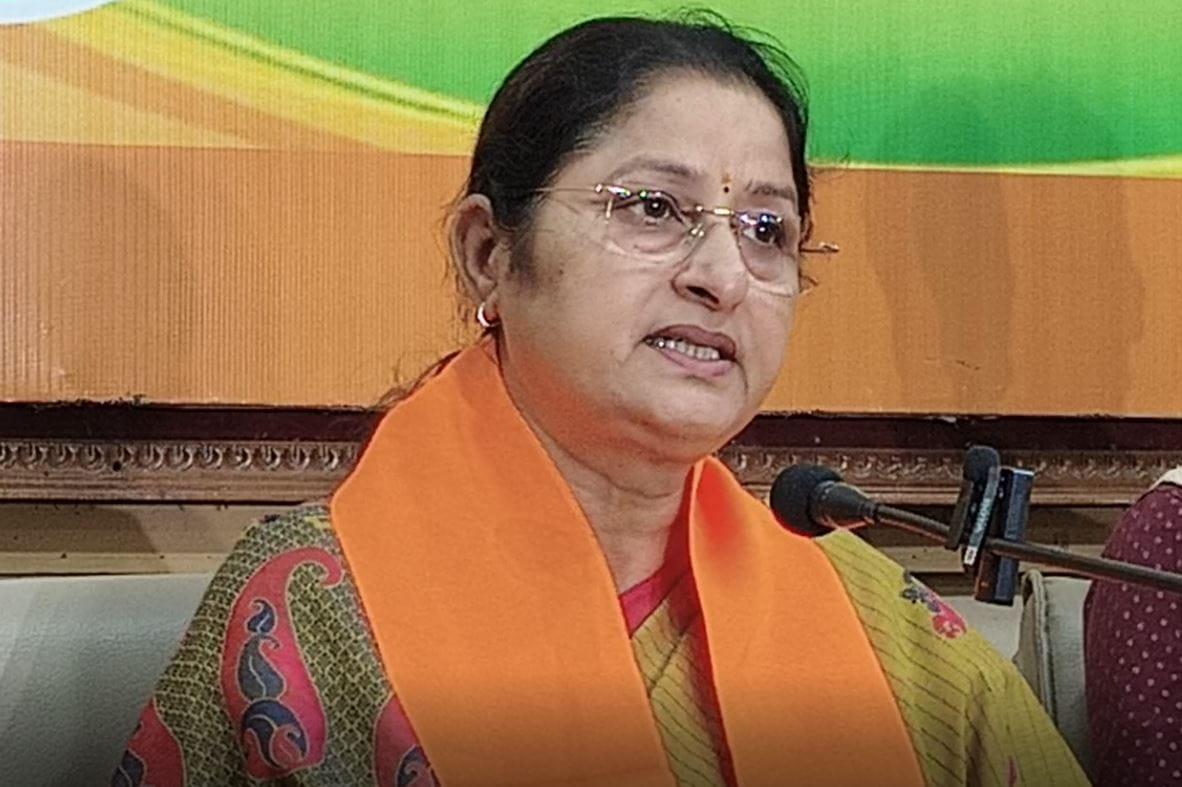
Photo: RP
The political confrontation between the Centre and Jharkhand over the Mines and Minerals (Development and Regulation) Amendment Act, 2026, is intensifying, with Union Minister Annapurna Devi questioning the state government’s opposition to the new mining framework.
The amendment, passed by Parliament in August and receiving presidential assent on August 17, introduces restrictions on states imposing taxes, cess and other levies on mineral rights and mineral-bearing land, except under conditions prescribed by the Centre. The government has defended the changes as an attempt to bring greater uniformity and predictability to the mining sector.
The Jharkhand government and opposition parties, however, have raised concerns over the impact of the legislation on the state’s fiscal powers and mineral revenue. Jharkhand has also indicated that it will challenge the amendment in the Supreme Court.
Against this backdrop, Annapurna Devi said the amendment should not be viewed as an attempt to take away the rights of mineral-producing states. She argued that the objective was to create a more uniform, stable and transparent framework for the mining industry and accused critics of creating confusion around its provisions.
‘Uniform framework can improve mining environment’
According to the Union minister, multiple taxes, cesses and other charges imposed in different jurisdictions had created uncertainty for companies operating in the mining sector.
The Centre has similarly argued that mining currently involves several taxes, fees and statutory payments and that differing levies across states can increase costs and make some projects commercially unviable. The government says the amended framework is intended to provide greater certainty for investment and encourage mineral production.
Annapurna Devi said a more predictable system could help attract investment, encourage mineral-based industries and create employment opportunities.
Questioning Jharkhand’s opposition
The Union minister also questioned why the amendment has triggered particularly strong political opposition in Jharkhand, arguing that the changes form part of a broader national framework rather than being directed specifically at the state.
Her remarks come as the debate over the legislation has increasingly become a federalism and revenue issue. Congress-ruled states, including Karnataka, Telangana and Himachal Pradesh, have also considered legal action against the amendment, while Jharkhand has decided to pursue its own challenge.
At the heart of the dispute is the question of how much taxation authority states should retain over mineral rights and mineral-bearing land.
Under the new Section 9D, states cannot impose specified taxes, cess or other levies on mineral rights or mineral-bearing land except in accordance with conditions or restrictions prescribed by the Centre. The legislation also provides that certain unpaid or unrecovered levies from before the Act’s commencement would be treated as invalid, while amounts already deposited or recovered would not be refunded.
Revenue and mining activity at the centre of debate
Jharkhand, one of India’s major mineral-producing states, has argued that its ability to raise revenue from its natural resources is closely linked to its development needs.
The state government has reiterated its demand for the authority to levy mining cess and has announced plans to challenge the amended law in the Supreme Court.
The Centre, meanwhile, maintains that the amendment will not take away the states’ existing share of mining-related revenue. According to the Union government, around 90 per cent of total taxes and statutory payments generated from mining currently accrue to the states, and this overall arrangement will continue.
Concerns over mining and coal
Annapurna Devi also raised concerns over the functioning of Jharkhand’s mining sector, questioning why several mining areas were allegedly not becoming operational on time despite the state’s substantial mineral reserves.
She argued that faster development of mineral resources could generate investment, industrial activity and employment while increasing legitimate government revenue.
The minister also raised the issue of illegal coal mining and coal theft, questioning the situation in a state that possesses significant coal reserves.
She called for stronger enforcement and a more transparent mining system, arguing that improved regulation could help curb illegal activities.
A wider federal debate
The dispute over the MMDR Amendment has now moved beyond mining policy and into a broader debate over Centre-state fiscal powers.
The Centre says a predictable and uniform framework is necessary to attract investment, improve mining viability and strengthen domestic mineral supplies.
Critics, meanwhile, have questioned whether the new restrictions unduly limit states’ taxation powers. PRS Legislative Research has also flagged constitutional questions surrounding Parliament’s power over mineral-bearing land, particularly in light of the Supreme Court’s 2024 ruling on states’ taxation powers.
With Jharkhand preparing to challenge the legislation in court, the issue is likely to remain a significant political and legal flashpoint, particularly for mineral-rich states seeking greater control over revenue from their natural resources.



© Copyright
Reporter Post.All Rights Reserved |
Powered by: Aptilogic Software |
 |
Page rendered in 0.0084 seconds.
|
Page rendered in 0.0084 seconds.