Wed, September 23, 2026

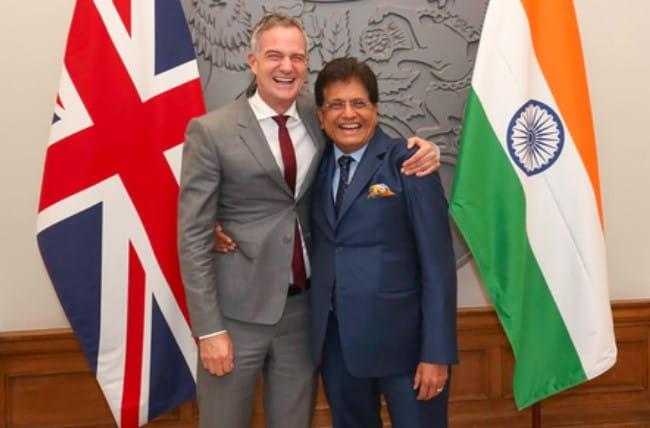
New Delhi: India's leading industry bodies, Nasscom and the Federation of Indian Chambers of Commerce and Industry (FICCI), on Wednesday welcomed the implementation of the India-UK Free Trade Agreement (FTA), describing it as a major step towards expanding trade, technology collaboration, investment and skilled workforce mobility.
Nasscom said the agreement is expected to create fresh opportunities in digital trade, innovation, cross-border investments and talent exchange between the two countries.
The industry body also welcomed the conclusion of the Double Contribution Convention (DCC), under which Indian professionals on short-term assignments in the UK will continue contributing to India's social security system instead of the UK's for up to five years.
Highlighting efforts to strengthen bilateral cooperation, Nasscom said it had launched the Nasscom UK Forum in November 2025 to bring together leading Indian technology companies with significant operations in the UK.
The forum is expected to serve as a strategic platform for deepening digital trade, advancing the India-UK Technology Security Initiative and the Vision 2035 roadmap, while strengthening engagement between governments, policymakers and innovation ecosystems.
"As technology becomes an increasingly powerful driver of economic growth, Nasscom remains committed to working with both governments and industry to translate the FTA into tangible outcomes through greater trade, investment, innovation and talent collaboration," said Rajesh Nambiar, President of Nasscom.
Manish Malhotra, Chair of the Nasscom UK Forum, said the India-UK technology partnership is entering a new phase of growth, with the forum providing a long-term platform for industry and government to jointly shape the future of the strategic relationship.
According to the industry body, a group of leading Indian technology companies currently supports more than 35,000 jobs across the UK, with nearly 62 per cent of their workforce employed outside London, contributing significantly to regional economic development, local talent creation and artificial intelligence capabilities.
Earlier in the day, Union Commerce and Industry Minister Piyush Goyal announced that the India-UK Comprehensive Economic and Trade Agreement (CETA), along with the Agreement on Social Security, had officially come into force. He said the pact provides zero-duty market access for nearly 99 per cent of India's exports, covering almost the entire value of bilateral trade.
Welcoming the development, FICCI President Anant Goenka said the agreement aligns with the vision of Viksit Bharat by strengthening India's global competitiveness and deepening its integration with international trade and investment networks.
"As India advances towards becoming a developed economy, high-quality economic partnerships will play an important role in expanding business opportunities, strengthening industrial capabilities and enhancing the country's participation in global trade and investment networks," Goenka said.
FICCI added that the agreement reflects India's forward-looking approach to global economic engagement and is expected to support the country's long-term goals of growth, innovation and economic transformation.
With inputs from IANS




© Copyright
Reporter Post.All Rights Reserved |
Powered by: Aptilogic Software |
 |
Page rendered in 0.0075 seconds.
|
Page rendered in 0.0075 seconds.