
Fri, September 25, 2026

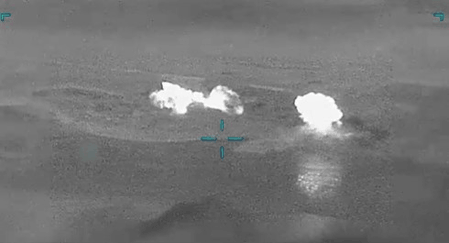
Washington: The United States launched another round of military strikes on multiple targets in Iran after Tehran allegedly carried out a fresh drone attack on a commercial oil tanker near the Strait of Hormuz, according to the US Central Command (CENTCOM).
The latest operation came a day after US forces struck Iranian targets in response to what Washington described as an earlier attack on the commercial vessel M/V Ever Lovely. US officials said Iran had been given an opportunity to honour a ceasefire agreement but instead escalated tensions by targeting another commercial tanker.
In a statement posted on X, CENTCOM said its forces carried out the strikes on June 27 under the direction of the Commander in Chief.
According to the US military, Iran launched a one-way attack drone that struck the Panama-flagged tanker M/T Kiku at around 4:30 a.m. ET while it was transiting near the Strait of Hormuz. The vessel was reportedly carrying more than two million barrels of crude oil.
CENTCOM said the latest strikes were a direct response to what it described as Iran's continued attacks on commercial shipping. The operation targeted Iranian military surveillance infrastructure, communication systems, air defence sites, drone storage facilities and minelayer capabilities.
In a separate statement, the command said US Navy and Air Force fighter jets struck 10 Iranian military targets in and around the Strait of Hormuz in retaliation for the drone attack on the M/T Kiku.
The latest exchange marks a further escalation in tensions between Washington and Tehran, with the US saying the strikes were intended to reduce Iran's ability to threaten international commercial shipping through the strategically important waterway.
Despite the renewed military action, CENTCOM said commercial vessels continue to transit through the Strait of Hormuz and that US forces remain "vigilant, lethal, and ready."
The Strait of Hormuz is one of the world's most critical energy corridors, handling a significant share of global oil exports. Any disruption to shipping through the passage has the potential to impact global energy markets and regional security.
With inputs from IANS



© Copyright
Reporter Post.All Rights Reserved |
Powered by: Aptilogic Software |
 |
Page rendered in 0.0076 seconds.
|
Page rendered in 0.0076 seconds.