Sun, September 27, 2026

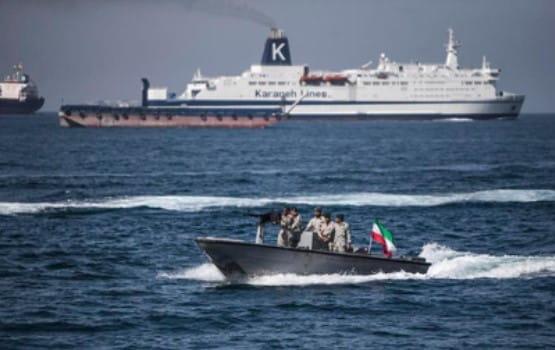
Tehran — Iran has said that restrictions on shipping through the strategically important Strait of Hormuz remain in place, contradicting a recent claim by US President Donald Trump that a naval blockade on Iran had been lifted.
According to Iran's semi-official Tasnim news agency, Iranian sailors reported that vessels are still receiving warnings from the US Central Command and continue to face restrictions when attempting to pass through the waterway.
Trump, in a post on his social media platform Truth Social on Friday, stated that the US naval blockade on Iran "will now be lifted." He also outlined conditions for a potential agreement with Tehran, including a commitment by Iran never to acquire nuclear weapons.
The US President further called for the immediate reopening of the Strait of Hormuz to unrestricted maritime traffic in both directions and said that any sea mines in the area should be removed. Trump also proposed that Iran's stockpiles of enriched uranium be identified and destroyed in coordination with Iran and the International Atomic Energy Agency.
Iran, however, has maintained that nuclear-related issues are not part of the current phase of negotiations.
Meanwhile, Iran's main military command, the Khatam al-Anbiya Central Headquarters, said on Saturday that the country's armed forces continue to exercise full authority over the Strait of Hormuz.
In a statement carried by the official news agency IRNA, the command emphasized that all vessels, including commercial ships and oil tankers, must use routes designated by Iran and obtain authorization from the Navy of the Islamic Revolutionary Guard Corps before transiting the strait.
The IRGC Navy also reported that 20 vessels had crossed the waterway over the previous 24 hours in coordination with Iranian maritime authorities. According to the semi-official Fars news agency, permission was granted to these ships due to their countries' need for essential commodities, including chemical fertilizers.
The Strait of Hormuz, one of the world's most critical energy transit routes, has been under heightened scrutiny since Iran tightened control over the passage on February 28 following joint strikes on Iranian territory. Tehran subsequently imposed restrictions on vessels linked to Israel and the United States, while Washington also maintained naval measures affecting traffic to and from Iranian ports.
The latest developments highlight continuing tensions over navigation and security in the Gulf region, despite indications from Washington that it is seeking to ease some restrictions as part of broader diplomatic efforts with Tehran.
With inputs from IANS



© Copyright
Reporter Post.All Rights Reserved |
Powered by: Aptilogic Software |
 |
Page rendered in 0.0083 seconds.
|
Page rendered in 0.0083 seconds.