Tue, September 08, 2026

The United States has announced a sweeping maritime blockade targeting vessels entering or exiting Iranian ports, marking a sharp escalation in tensions after negotiations between Washington and Tehran failed to resolve key issues, particularly Iran’s nuclear programme.
The move was confirmed by US Central Command, which stated that the blockade will apply to all maritime traffic linked to Iranian ports, including those along the Arabian Gulf and the Gulf of Oman. However, ships transiting the Strait of Hormuz to non-Iranian destinations will not be obstructed.
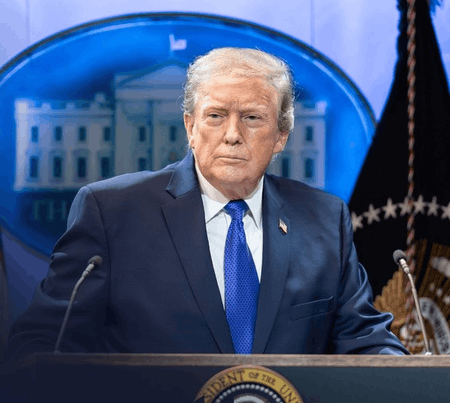
The operation came into effect on April 13, following a directive from Donald Trump, who said talks had stalled despite progress on several fronts. According to him, the central sticking point remained Iran’s nuclear ambitions. He also accused Iran of using threats in the region as leverage, describing the situation as a form of coercion in global shipping routes.
In response, Iran strongly criticised the decision. Foreign Minister Seyed Abbas Araghchi said negotiations were close to a breakthrough and blamed the US for derailing the process with last-minute demands and the blockade announcement.
Analysts, including those from the Institute for the Study of War, suggest the conflict is tied to Iran’s alleged tactics in the Strait of Hormuz—one of the world’s most critical oil transit routes. Iran is accused of designating “hazard zones” and pushing vessels into its territorial waters, where they are reportedly asked to pay protection fees—an act widely considered a violation of international maritime law.
Meanwhile, US naval forces have already begun operations to stabilise the region. Warships such as USS Frank E. Peterson and USS Michael Murphy have been deployed to ensure safe passage and initiate mine-clearing efforts. CENTCOM commander Brad Cooper stated that secure navigation routes will soon be communicated to commercial shipping operators.
The development has heightened concerns globally, as any disruption in this region can directly impact oil supplies, shipping costs, and overall economic stability.
With inputs from IANS



© Copyright
Reporter Post.All Rights Reserved |
Powered by: Aptilogic Software |
 |
Page rendered in 0.0212 seconds.
|
Page rendered in 0.0212 seconds.