Mon, September 28, 2026

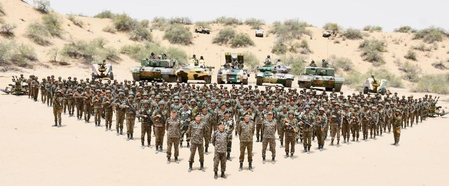
New Delhi: The Central Government has officially notified the rules under the Inter-Services Organisations (Command, Control and Discipline) Act, 2023, marking a major step toward enhancing jointness, command efficiency, and operational synergy among the Armed Forces.
The rules, notified via Gazette and effective from May 27, aim to streamline the functioning of Inter-Services Organisations (ISOs) and enable better coordination among the Army, Navy, and Air Force.
In a statement issued Wednesday, the government said the move is a “significant milestone” in strengthening the command and control structure of ISOs, promoting integrated operations while maintaining the distinct service conditions of each branch.
The legislation, passed by both the Lok Sabha and Rajya Sabha during the Monsoon Session of 2023, received Presidential assent on August 15, 2023. The Act officially came into force on May 10, 2024, following a Gazette Notification issued on May 8. Specific ISOs were subsequently notified under Gazette Notification No. SRO 72 on December 27, 2024.
The Act empowers Commanders-in-Chief and Officers-in-Command of ISOs to exercise authority over personnel from all three services serving under them. It ensures discipline and administrative efficiency without compromising the individual service norms of the Army, Navy, and Air Force.
The subordinate rules, framed under Section 11 of the Act, provide the operational and disciplinary framework necessary for the Act’s effective implementation. They detail procedures for command succession, administrative responsibilities, and handling of disciplinary matters across inter-service establishments.
According to the notification, when a Commander-in-Chief, Officer-in-Command, or Commanding Officer is absent, their replacement will be announced through orders issued by the respective ISO, unit, or establishment. In emergencies where such orders have not been issued, an officer from the next higher formation may be deputed to assume the role until a formal appointment is made.
Such officiating officers, within the bounds of their respective Service Acts and regulations, will hold all powers of the Commander-in-Chief or equivalent positions.
For disciplinary matters, the rules specify: “The Commander-in-Chief of a Joint Services Command, Officer-in-Command of an inter-services establishment, and Commanding Officer of an inter-services unit shall exercise all disciplinary and administrative powers over personnel subject to any of the Service Acts.”
With these rules now in force, the Inter-Services Organisations Act is fully operational, empowering ISO leadership, enabling swift disciplinary actions, and eliminating duplication of proceedings.
With inputs from IANS



© Copyright
Reporter Post.All Rights Reserved |
Powered by: Aptilogic Software |
 |
Page rendered in 0.0108 seconds.
|
Page rendered in 0.0108 seconds.