Mon, September 28, 2026

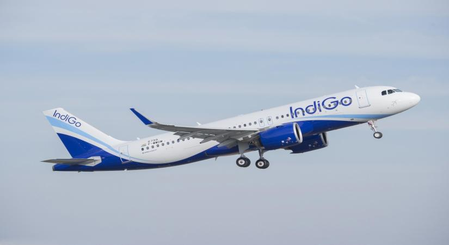
New Delhi – A major aviation safety incident unfolded when Lahore Air Traffic Control (ATC) denied an emergency request from an IndiGo flight to briefly enter Pakistani airspace to avoid a severe hailstorm—prompting criticism over a breach of standard humanitarian aviation norms.
According to India’s civil aviation regulator, the Directorate General of Civil Aviation (DGCA), the aircraft was en route to Srinagar and cruising at around 36,000 feet near Pathankot in Punjab when it encountered intense thunderstorm and hailstorm activity.
Faced with severe turbulence, the flight crew first sought permission from the Indian Air Force’s Northern ATC to deviate toward the International Border. However, the request was denied due to security concerns, particularly in the context of heightened tensions with Pakistan following Operation Sindoor.
With conditions worsening, the pilot then contacted Lahore ATC, requesting temporary entry into Pakistani airspace to safely navigate around the storm. This request was also denied.
Left with limited options, the crew initially considered returning to Delhi. However, due to the aircraft’s proximity to the storm system, turning back was deemed unsafe. The pilot opted instead to proceed to Srinagar via the shortest possible route, despite the hazardous weather.
While traversing the thunderstorm, the aircraft encountered extreme turbulence with sudden updrafts and downdrafts. The autopilot disengaged, and the aircraft experienced unstable speed variations. The DGCA reported that the aircraft triggered multiple warnings, including "angle of attack fault," "alternate law protection lost," and "unreliable airspeed indications."
At one point, the aircraft’s rate of descent reached a critical 8,500 feet per minute. The crew assumed manual control during this phase until they successfully navigated out of the storm.
The pilot declared an emergency and coordinated with Srinagar ATC, which provided radar vectors to guide the aircraft safely. The flight landed without incident in Srinagar, with no injuries reported among passengers or crew.
Post-flight inspection revealed damage to the aircraft’s nose, attributed to the hailstorm. The DGCA confirmed that the auto thrust system had to be operated manually during landing and that a full investigation into the incident has been initiated.
With inputs from IANS



© Copyright
Reporter Post.All Rights Reserved |
Powered by: Aptilogic Software |
 |
Page rendered in 0.0168 seconds.
|
Page rendered in 0.0168 seconds.