Sun, October 18, 2026

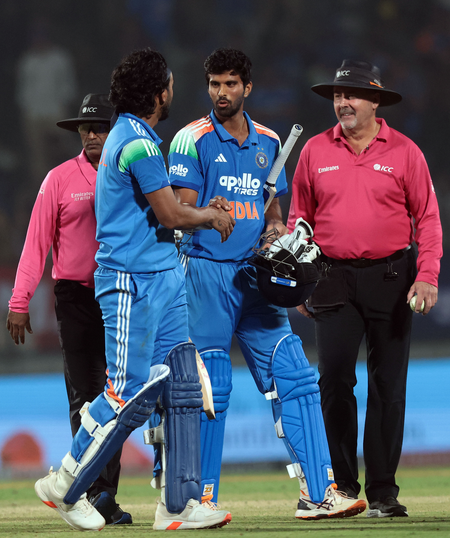
New Delhi- India’s off-spin all-rounder Washington Sundar has been ruled out of the final two matches of the ongoing ODI series against New Zealand after sustaining a side strain during the opening game in Vadodara on Sunday, sources said on Monday.
According to the sources, Sundar’s availability for the upcoming five-match T20I series against New Zealand, scheduled to begin on January 21 in Nagpur, is also in doubt due to the nature of the injury.
“Sundar has been ruled out of the remaining two ODIs after being diagnosed with a side strain, which he suffered after taking a blow to his left rib in the first match in Vadodara. Recovery from a side strain usually takes time, so his availability for the T20I series remains uncertain,” a source familiar with the matter told IANS.
India captain Shubman Gill had earlier addressed concerns over Sundar’s fitness, stating that the all-rounder had been taken for scans after the match. “He will be going for a scan, and we will have more clarity once the results are available,” Gill said during the post-match presentation.
Fast bowler Harshit Rana also confirmed the injury during the post-match press conference. “Washington Sundar has a side strain. He was in pain while batting. The medical team will assess him and provide an update,” Rana said.
While the Board of Control for Cricket in India (BCCI) is yet to make an official announcement, Sundar’s absence would be a major setback for the hosts, particularly with the home T20 World Cup approaching. The all-rounder is currently part of India’s World Cup squad, but his recovery timeline remains uncertain.
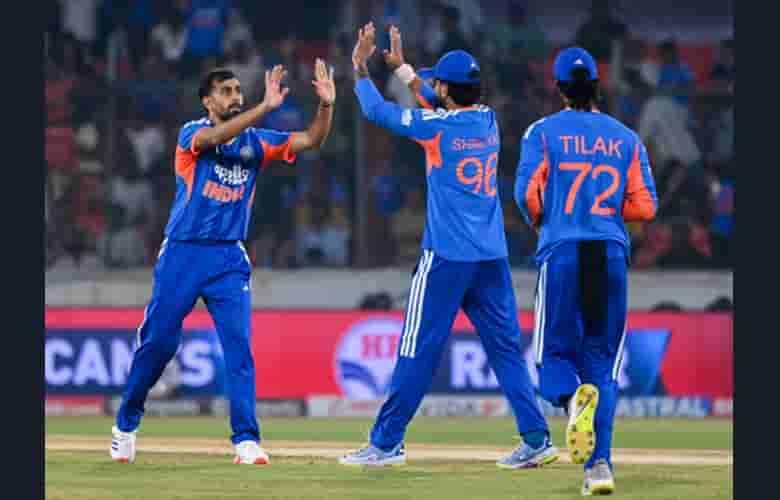
Sundar’s injury adds to India’s growing concerns in the ongoing white-ball series against New Zealand. It marks the third injury setback for the Men in Blue, following Rishabh Pant and Tilak Varma. Pant was ruled out of the ODI series last week after suffering a side strain and was replaced by Dhruv Jurel, while Varma underwent surgery for a groin injury and has been sidelined for the first three T20Is of the five-match series.
With inputs from IANS




© Copyright
Reporter Post.All Rights Reserved |
Powered by: Aptilogic Software |
 |
Page rendered in 0.0107 seconds.
|
Page rendered in 0.0107 seconds.