Thu, August 13, 2026






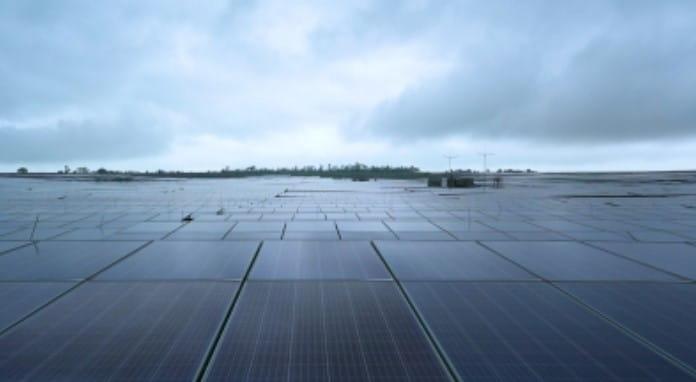
Photo: IANS
India is on course to achieve its highest-ever annual solar capacity addition in 2026, with installations expected to cross 50 GWdc, even as the country’s push to strengthen domestic manufacturing creates short-term supply constraints and raises project costs.
According to a new analysis by Wood Mackenzie, India added around 34 GWdc of solar capacity during the first half of 2026, 38 per cent higher than the corresponding period last year. If the current momentum continues, annual additions could surpass the previous record of 49 GWdc achieved in 2025.
A major factor behind the strong first-half growth was the rush among developers to commission projects before the June deadline under the Approved List of Models and Manufacturers-II (ALMM-II) regime. The policy is aimed at increasing the use of domestically manufactured solar equipment and reducing dependence on imported components.
However, the rapid expansion has also exposed a gap between domestic solar module and cell manufacturing capacity. Sureet Singh, Research Analyst at Wood Mackenzie, said the ALMM-II mandate represents an important step towards building an integrated domestic solar supply chain, but domestic cell production has not expanded as quickly as module manufacturing.
This imbalance is expected to put upward pressure on solar equipment prices in the near term. Developers may therefore face higher project costs before additional manufacturing capacity comes online and the market begins to stabilise.
The pace of new installations is likely to moderate during the second half of 2026 as shortages of domestically compliant solar cells and rising module prices affect project economics. At the same time, certain policy exemptions could help sustain growth.
The phased withdrawal of waivers on inter-state transmission charges has also influenced project commissioning. The waiver was reduced from 75 per cent to 50 per cent for projects commissioned from July 2026 and is scheduled to be completely phased out after July 2028. Developers have consequently accelerated some projects to benefit from the remaining incentives.
ALMM-II waivers for net-metering and open-access projects remain available until December 31, 2026, potentially providing additional support to annual installations. In July, the Ministry of New and Renewable Energy also allowed exemptions from the mandate for certain projects nearing completion, provided applications had been submitted by July 23.



The shift towards domestic sourcing is already changing India's solar import pattern. While ALMM-II has reduced direct imports of solar cells from China, Indian developers and manufacturers have increasingly turned to other Asian markets. Imports of cells from Indonesia, for instance, nearly tripled during the early months of 2026.
During the first five months of the year, India imported about 5 GW of wafers and 20 GW of solar cells. Wafer imports rose 86 per cent year-on-year as domestic manufacturers sought additional raw material to expand cell production.
Wood Mackenzie expects solar equipment prices to gradually stabilise through 2029 as new domestic cell manufacturing facilities become operational. Mathew Thomas, Research Analyst at the firm, said policy consistency and timely execution by manufacturers will be crucial during this transition.
The developments underline a key phase in India's renewable-energy expansion: the country is adding solar capacity at record speed while simultaneously attempting to build a more self-reliant manufacturing ecosystem. The short-term rise in costs could therefore be part of the broader adjustment required to reduce import dependence and strengthen India's long-term position in the global solar supply chain.





© Copyright
Reporter Post.All Rights Reserved |
Powered by: Aptilogic Software |
 |
Page rendered in 0.0791 seconds.
|
Page rendered in 0.0791 seconds.