Fri, July 17, 2026

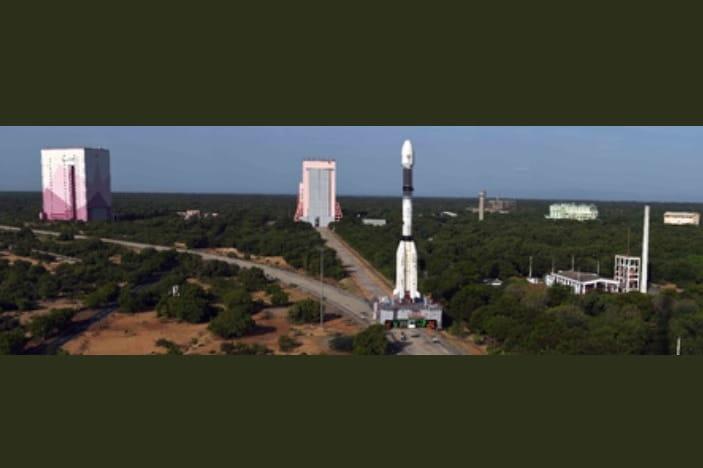
Bengaluru: The Department of Space (DoS) has introduced stricter rules for the resignation and voluntary retirement of scientists involved in mission-critical projects, seeking to prevent a talent drain from the Indian Space Research Organisation (ISRO) as the country pushes ahead with several high-profile space missions.
The decision comes after reports that more than 100 scientists and technical experts have left ISRO over the past year, raising concerns about the loss of experienced personnel and institutional expertise. Although the Department of Space has not officially confirmed the exact figure, internal estimates suggest that between 100 and 120 employees have resigned in recent months.
ISRO Chairman V. Narayanan acknowledged the resignations, saying that employee turnover is common in large organisations. However, he stressed that the new policy is aimed at ensuring that crucial national missions are not affected by the departure of key scientists before projects are completed.
The move follows growing concern over experienced scientists leaving for opportunities in India's expanding private space industry. Several senior personnel linked to landmark missions such as Chandrayaan-3, the Space Docking Experiment (SpaDeX), and the Gaganyaan human spaceflight programme have reportedly resigned to take up private-sector roles offering better pay, greater flexibility and faster career growth.
According to reports, the Department of Space issued an internal memorandum on July 14 directing that resignation and voluntary retirement requests from Group 'A' scientific and technical officers working on strategically important missions will no longer receive routine approval. Instead, ISRO centre directors have been instructed to defer such requests until the completion of the projects concerned.
Under the revised framework, all pending and future applications from scientists associated with critical missions will be forwarded to the Department of Space in New Delhi, along with recommendations from the respective centre directors, for final approval.
The policy marks a shift from the guidelines introduced in November 2020, under which directors of ISRO centres and unit heads were authorised to approve resignations and voluntary retirements for personnel up to the rank of Scientist/Engineer-SG.
The impact of attrition has reportedly been most visible at some of ISRO's major centres. Bengaluru's U R Rao Satellite Centre (URSC), which is responsible for satellite development, has reportedly seen around 80 resignations, while the Vikram Sarabhai Space Centre (VSSC) in Thiruvananthapuram has witnessed at least 20 scientists leaving the organisation.
Among those reported to have resigned are Victor Joseph, Project Director of the LVM3 launch vehicle programme; the Project Director of SpaDeX, India's first space docking mission; and Aditya Rallapalli, simulation project manager for Chandrayaan-3, who led the team that validated the Moon landing sequence through more than 100,000 simulations.
Industry experts believe the growing private space ecosystem in India has become a major attraction for ISRO professionals by offering significantly higher salaries, better career prospects and more flexible working conditions.
Attrition has been a recurring challenge for the space agency. Official records show that nearly half of ISRO's fresh recruits left the organisation between 2004 and 2007, while almost 700 employees resigned between 2012 and 2024. Parliamentary data presented earlier this year also indicated that the organisation is operating below its sanctioned workforce strength, with more than 1,600 scientific and technical positions still vacant.
Despite the recent wave of resignations, ISRO has maintained that responsibilities are being reassigned efficiently and that flagship missions, including the Gaganyaan human spaceflight programme, remain on track.
With inputs from IANS




| 14-09-2018 | ||||||
| Sl No. | Parameters | Actual Data(µg/m3) | Standard Limit(µg/m3) |
|---|---|---|---|
| 1 | PM 10 | 64 | 100 |
| 2 | PM 2.5 | 33 | 60 |
| 3 | SO2 | 55.3 | 80 |
| 4 | NO2 | 58.2 | 80 |
| 14-09-2018 | ||||||
| Station | Temperature(degree centigrade) | Rainfall(mm) | Relative humidity(%) | |||
|---|---|---|---|---|---|---|
| Max | Min | Past 24 hrs. | Since 1st March, 2018 | Max | Min | |
| Ranchi | 31.0 | 22.5 | 000.0 | 1010.1 | 95 | 66 |
| Jamshedpur | 34.1 | 26.2 | 000.0 | 1252.8 | 87 | 58 |
| Bokaro | 33.5 | 24.6 | 015.2 | 824.0 | 92 | 79 |
| Daltonganj | 32.6 | 24.9 | 004.2 | 960.9 | 95 | 67 |
© Copyright
Reporter Post.All Rights Reserved |
Powered by: Aptilogic Software |
 |
Page rendered in 0.1044 seconds.
|
Page rendered in 0.1044 seconds.