Thu, October 22, 2026


New Delhi — Railway Minister Ashwini Vaishnaw on Thursday announced that India is expected to receive its first Bullet Train on August 15, 2027, marking a historic milestone in the country’s rail infrastructure development.
Vaishnaw said the nation would witness its first Bullet Train operating on Indian tracks next year, coinciding with Independence Day celebrations in 2027. “Buy a Bullet Train ticket on Independence Day in 2027, and the country will have its first Bullet Train,” he said.
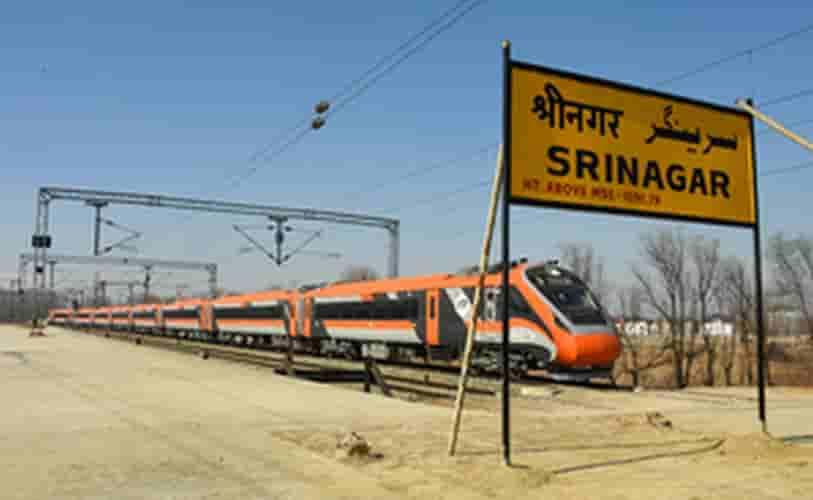
Highlighting the success of semi-high-speed rail services, the minister noted that the Vande Bharat Express chair car has generated widespread public confidence and appreciation. He said demand for Vande Bharat trains is pouring in from across the country, with nearly every Member of Parliament seeking services for their respective regions.
“With the same levels of comfort, safety and quality, a new era of overnight travel will begin with the Vande Bharat Sleeper trains,” Vaishnaw added.
India’s first Bullet Train project covers a total distance of 508 kilometres between Mumbai and Ahmedabad. Of this, 352 kilometres fall within Gujarat and Dadra and Nagar Haveli, while the remaining 156 kilometres are in Maharashtra.
According to the government, the high-speed corridor will connect major urban centres including Ahmedabad, Vadodara, Bharuch, Surat, Vapi, Thane and Mumbai. Once operational, the project is expected to reduce travel time between Mumbai and Ahmedabad to approximately two hours, significantly enhancing inter-city connectivity.
The National High-Speed Rail Corporation Limited (NHSRCL) has reported that more than 85 per cent of the corridor — about 465 kilometres — is being constructed on elevated viaducts, with 326 kilometres already completed.
In November, Prime Minister Narendra Modi conducted a comprehensive review of the Mumbai–Ahmedabad High-Speed Rail (MAHSR) project during his visit to Gujarat, underscoring the government’s focus on next-generation transport infrastructure.
During the visit, the Prime Minister also inspected the Surat Bullet Train station, whose design draws inspiration from the city’s globally recognised diamond industry. The station stands 26.3 metres tall with a built-up area of 58,352 square metres and comprises three levels: a ground floor for parking and security checks, a concourse level housing lounges, restrooms, kiosks and ticketing facilities, and an upper platform level for passenger boarding.
While the structural work at the station has been completed, interior finishes and passenger amenities are currently under development. Track-related works, including reinforced concrete track-bed construction and temporary track installation, have also been completed at the site.
Significant progress has also been made on river bridges along the corridor, with 17 out of 25 bridges already constructed. The 47-kilometre Surat–Bilimora section is among the most advanced stretches, where civil works and track-bed preparation have been fully completed.
With inputs from IANS



© Copyright
Reporter Post.All Rights Reserved |
Powered by: Aptilogic Software |
 |
Page rendered in 0.0106 seconds.
|
Page rendered in 0.0106 seconds.