Mon, October 12, 2026

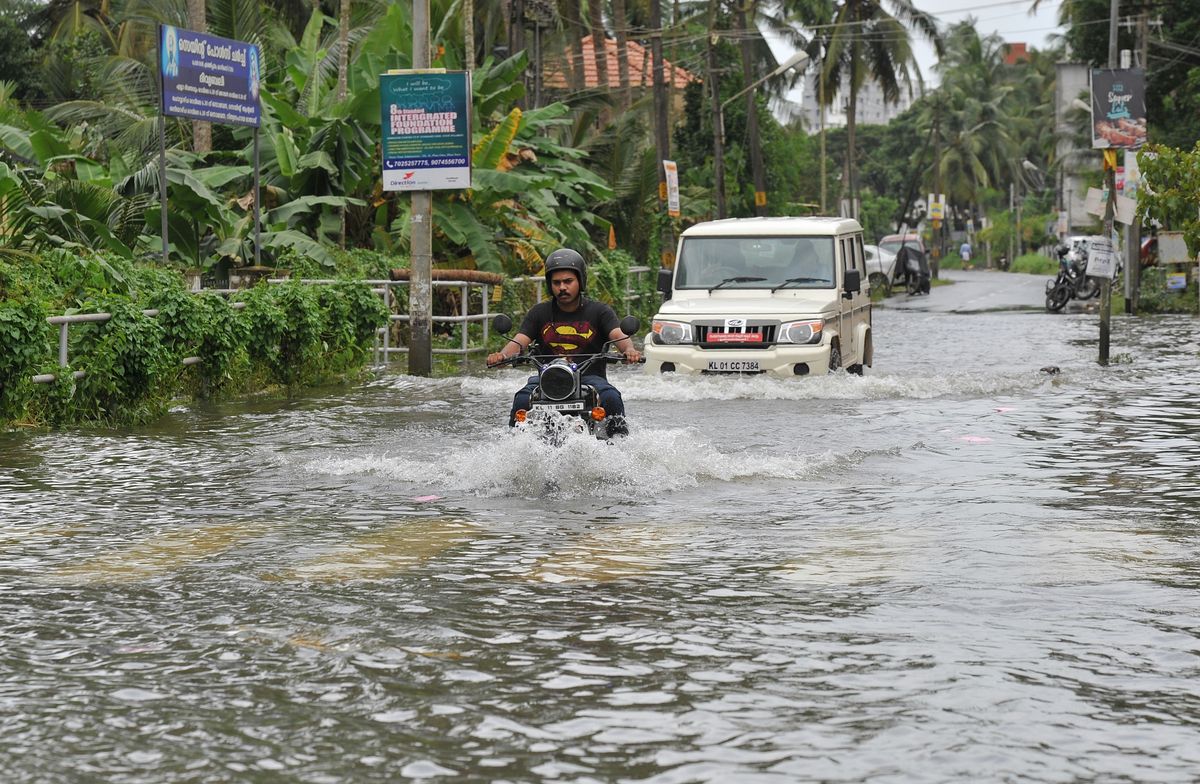
Photo: IANS
The death toll from Kerala’s devastating floods and torrential rains rose to 370 on Sunday as rescue teams continued their efforts to reach thousands of people stranded in some of the worst-hit parts of the state.
Alappuzha, Ernakulam and Thrissur remained among the most severely affected districts, although authorities withdrew the red alert for all three. The India Meteorological Department (IMD) also forecast moderate rainfall in some parts of the state, raising hopes that the flood situation could gradually improve.
Several areas, including Chengannur, Pandalam and Thiruvalla in Pathanamthitta district, as well as Aluva, Angamaly and Paravur in Ernakulam, had remained cut off for days. Many residents were reportedly stranded without adequate food and drinking water.
There were, however, signs of improvement in some locations as water levels began to fall. Fresh rainfall was still reported in several affected areas, but the overall reduction in water levels allowed rescue and relief operations to expand.
A group of fishermen who had travelled from Thiruvananthapuram to Alappuzha to assist in rescue operations complained about a lack of coordination after completing their work.
“We rescued several people but now there is no one to help us return to where we came from with our boats,” the fishermen said, adding that they had risked their lives to help those trapped by the floods.
The crisis also exposed difficulties in delivering medical assistance to isolated communities. Congress legislator V.D. Sateeshan criticised the state Health Ministry for what he described as delays in sending medical teams to affected areas.
Health Minister K.K. Shailaja defended the response, saying the unprecedented scale of the disaster and difficult travel conditions had prevented medical personnel from reaching some locations.
She said the immediate situation had improved in many areas but warned that the state would require large quantities of medicines and medical supplies. A major health campaign was also being planned to prevent outbreaks of communicable diseases following the retreat of the floodwaters.
Medical teams from neighbouring states were expected to arrive to support Kerala’s healthcare response.
Rescue workers said that falling water levels were creating a different logistical challenge. While larger boats had been crucial during the peak flooding, they could no longer operate effectively in some shallow and partially drained areas.
Small boats and inflatable craft were therefore being used to reach interior locations, particularly parts of Chengannur and waterlogged areas of Alappuzha that remained inaccessible.
The situation around the major reservoirs also showed signs of improvement. Rainfall in the catchment areas of Idukki district had decreased, prompting authorities to close two of the five floodgates of the Idukki dam. Water releases from both the Idukki and Mullaperiyar reservoirs had also declined.
The reduced discharge helped bring down water levels in the Periyar and its tributaries flowing through Ernakulam and Thrissur.
Transport links were also slowly being restored. The Kottayam railway sector resumed operations with special passenger trains, while the Kerala State Road Transport Corporation restarted services on the MC Road to Kottayam.
Meanwhile, political debate intensified over the Centre’s response to the disaster. CPI-M General Secretary Sitaram Yechury, who arrived in Thiruvananthapuram, said the central assistance announced so far was insufficient given the scale of the destruction.
Yechury called on Prime Minister Narendra Modi to declare the crisis a national disaster, saying the situation required a much larger national response.
The opposition had also demanded that the Army be given greater responsibility for rescue operations. Kerala CPI-M secretary Kodiyeri Balakrishnan rejected the demand, saying disaster-management rules governed the Army’s deployment and accusing Leader of Opposition Ramesh Chennithala of politicising the situation.
Kerala was experiencing its worst flooding and heaviest rainfall in nearly a century. The state government estimated that the unprecedented disaster had already caused losses exceeding Rs 19,500 crore.
With floodwaters gradually receding in some areas, the focus was beginning to shift from immediate rescue to restoring essential services, preventing disease outbreaks and preparing for the enormous reconstruction effort that would follow.



© Copyright
Reporter Post.All Rights Reserved |
Powered by: Aptilogic Software |
 |
Page rendered in 0.0157 seconds.
|
Page rendered in 0.0157 seconds.