Wed, May 27, 2026

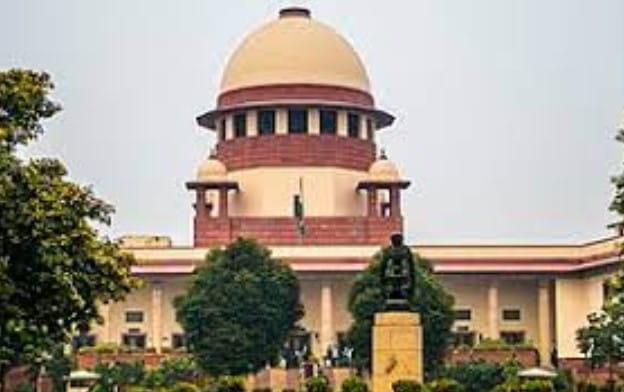
New Delhi — The Supreme Court of India on Wednesday upheld the Election Commission of India’s Special Intensive Revision (SIR) of electoral rolls, ruling that the exercise falls within the constitutional and statutory powers of the poll body and supports the objective of free and fair elections.
A Bench headed by Chief Justice of India Surya Kant and Justice Joymalya Bagchi held that the SIR exercise does not violate the provisions of the Representation of the People Act, 1950 or related rules governing electoral rolls.
The apex court observed that the Election Commission was empowered to undertake such an exercise under Article 324 of the Constitution along with Section 21(3) of the Representation of the People Act.
While delivering the verdict on petitions challenging the legality of the revision process, the Bench examined three major questions — whether the ECI had the authority to conduct the SIR, whether the exercise served a legitimate constitutional purpose, and whether the procedure followed violated existing electoral laws.
Ruling in favour of the poll body, the court stated that the SIR exercise did not replace or override the statutory framework for electoral roll revision.
“When the statute itself authorises a special revision at any time, for reasons to be recorded and in such manner as the Election Commission may deem fit, the impugned exercise cannot be invalidated merely because it does not conform in every respect to the ordinary modalities contemplated for routine revision,” the Bench observed.
The court further said the exercise reinforces the constitutional mandate under Article 324 and directly supports the democratic principle of free and fair elections.
“Free and fair elections do not rest merely upon the mechanics of polling. They fundamentally depend upon the integrity, accuracy and credibility of the electoral rolls,” the Bench noted.
The judgment pointed out that over four decades had passed since the last intensive revision and highlighted concerns arising from rapid urbanisation, migration, and large-scale additions and deletions in voter lists.
Rejecting allegations that the process was carried out merely for administrative convenience, the court held that the SIR exercise advances the constitutional goal of maintaining clean and credible electoral rolls.
The Bench also ruled that the exercise met the constitutional test of proportionality, observing that the measures adopted were reasonable and accompanied by adequate procedural safeguards.
“We are therefore satisfied that the impugned exercise meets the requirements of proportionality,” the court said, adding that safeguards ensured opportunities for participation, corrections, and grievance redressal.
The court also dismissed objections to the documentation framework prescribed by the ECI, stating that structured documentation was necessary to maintain administrative consistency and evidentiary reliability.
Importantly, the Supreme Court clarified that the Election Commission can examine questions related to citizenship while preparing or revising electoral rolls under Section 16 of the Representation of the People Act.
However, it stressed that such scrutiny is limited to electoral purposes and does not amount to a final declaration regarding citizenship status.
“It merely reflects the Commission’s inability to be satisfied, for electoral purposes, that the statutory conditions stand fulfilled,” the judgment clarified.
The court directed the ECI to refer cases where voters were deleted on grounds of doubtful citizenship to the competent authority under the Citizenship Act, 1955 within four weeks.
The concerned authority has been instructed to complete the adjudication process before the next Assembly or local body elections after providing affected individuals with notice and an opportunity to be heard.
The Bench also directed that if the competent authority later determines such individuals to be Indian citizens, their names must be restored to the electoral rolls.
The petitions challenging the SIR exercise had argued that the revision drive, first initiated in Bihar and later expanded to states including West Bengal, Kerala and Tamil Nadu, could disenfranchise genuine voters, especially migrants and marginalised communities unable to provide documentary proof.
The Election Commission had defended the exercise, saying it was necessary to ensure the purity and accuracy of electoral rolls and prevent duplication or inclusion of ineligible voters.
The verdict comes after the Bench reserved judgment on January 29 following extensive hearings on the matter.
With inputs from IANS




| 14-09-2018 | ||||||
| Sl No. | Parameters | Actual Data(µg/m3) | Standard Limit(µg/m3) |
|---|---|---|---|
| 1 | PM 10 | 64 | 100 |
| 2 | PM 2.5 | 33 | 60 |
| 3 | SO2 | 55.3 | 80 |
| 4 | NO2 | 58.2 | 80 |
| 14-09-2018 | ||||||
| Station | Temperature(degree centigrade) | Rainfall(mm) | Relative humidity(%) | |||
|---|---|---|---|---|---|---|
| Max | Min | Past 24 hrs. | Since 1st March, 2018 | Max | Min | |
| Ranchi | 31.0 | 22.5 | 000.0 | 1010.1 | 95 | 66 |
| Jamshedpur | 34.1 | 26.2 | 000.0 | 1252.8 | 87 | 58 |
| Bokaro | 33.5 | 24.6 | 015.2 | 824.0 | 92 | 79 |
| Daltonganj | 32.6 | 24.9 | 004.2 | 960.9 | 95 | 67 |
© Copyright
Reporter Post.All Rights Reserved |
Powered by: Aptilogic Software |
 |
Page rendered in 0.0818 seconds.
|
Page rendered in 0.0818 seconds.