Sat, August 01, 2026


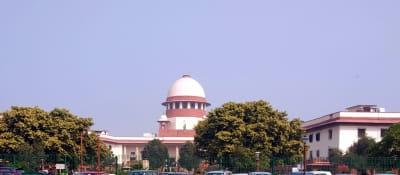
New Delhi — The Supreme Court of India on Wednesday made sharp oral observations over the alleged role of West Bengal Chief Minister Mamata Banerjee during an ongoing probe by the Enforcement Directorate (ED), stating that such conduct could put “democracy in peril.”
A Bench comprising Justices Prashant Kumar Mishra and N. V. Anjaria was hearing petitions filed by the ED. The agency has sought directions to register a case through the Central Bureau of Investigation (CBI) against Banerjee and senior state police officials, alleging obstruction during search operations at political consultancy firm I-PAC’s office in Kolkata.
During the hearing, the court expressed concern that a sitting Chief Minister entering the scene of an active investigation could undermine institutional processes. It rejected the argument that the matter was merely a Centre–State dispute, instead framing it as an individual act with wider implications for democratic functioning.
“This is not just a federal issue,” the Bench indicated, stressing that such actions, if proven, could place the system itself in jeopardy.
Senior advocate Meneka Guruswamy, appearing for state police officials, challenged the maintainability of the ED’s plea under Article 32. She argued that such petitions are meant for individuals alleging violation of fundamental rights, and that inter-governmental disputes should instead fall under Article 131. She also described the case as presenting a “unique question of law.”
However, the court was not persuaded, noting that the mere presence of a legal question does not warrant escalation to a larger constitutional bench.
On behalf of the West Bengal government, senior advocate Abhishek Manu Singhvi contended that the ED cannot invoke Article 32 for relief in this context. The court is currently hearing multiple petitions stemming from the ED’s claim that its officials were obstructed during searches conducted earlier this year.
Previously, on January 15, the apex court had stayed FIRs filed by the West Bengal Police against ED officials and directed that CCTV footage and digital evidence from the search locations be preserved.
In her counter-affidavit, Banerjee denied all allegations of interference. She stated that her presence at the premises was limited and aimed solely at retrieving confidential data belonging to her party, the All India Trinamool Congress (AITC).
According to her submission, she visited locations linked to I-PAC on January 8, 2026, after learning that sensitive political material—related to the party’s strategy for the upcoming state elections—might be accessed during the searches. She maintained that ED officials allowed her to retrieve certain devices and documents, after which she left without disrupting proceedings.
The affidavit also questions the timing of the ED’s actions, alleging they coincided with the run-up to the 2026 West Bengal Assembly elections and involved access to politically sensitive documents, including a proposed candidate list. It further accuses the agency of procedural lapses under the Prevention of Money Laundering Act (PMLA), including the absence of audio-visual records of the searches.
The ED, on its part, has alleged deliberate obstruction and is pushing for an independent probe by the CBI. The matter remains under consideration, with broader implications for the balance between investigative agencies and elected state leadership.
With inputs from IANS





| 14-09-2018 | ||||||
| Sl No. | Parameters | Actual Data(µg/m3) | Standard Limit(µg/m3) |
|---|---|---|---|
| 1 | PM 10 | 64 | 100 |
| 2 | PM 2.5 | 33 | 60 |
| 3 | SO2 | 55.3 | 80 |
| 4 | NO2 | 58.2 | 80 |
| 14-09-2018 | ||||||
| Station | Temperature(degree centigrade) | Rainfall(mm) | Relative humidity(%) | |||
|---|---|---|---|---|---|---|
| Max | Min | Past 24 hrs. | Since 1st March, 2018 | Max | Min | |
| Ranchi | 31.0 | 22.5 | 000.0 | 1010.1 | 95 | 66 |
| Jamshedpur | 34.1 | 26.2 | 000.0 | 1252.8 | 87 | 58 |
| Bokaro | 33.5 | 24.6 | 015.2 | 824.0 | 92 | 79 |
| Daltonganj | 32.6 | 24.9 | 004.2 | 960.9 | 95 | 67 |
© Copyright
Reporter Post.All Rights Reserved |
Powered by: Aptilogic Software |
 |
Page rendered in 0.08 seconds.
|
Page rendered in 0.08 seconds.