Wed, October 14, 2026
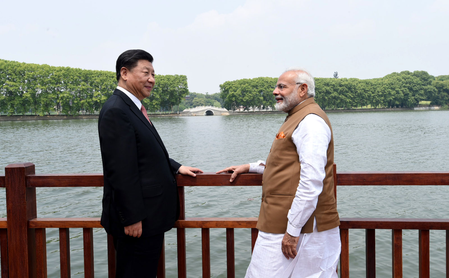
Tianjin (China): Prime Minister Narendra Modi arrived in Tianjin on Saturday to attend the Shanghai Cooperation Organisation (SCO) Summit, marking his first visit to China since 2018. The August 30–September 1 trip is being seen as an important diplomatic opportunity to recalibrate ties between New Delhi and Beijing, which have moved through phases of engagement, caution, and renewed attempts at stabilisation.
PM Modi was warmly welcomed by members of the Indian diaspora. On Sunday, he will hold a bilateral meeting with Chinese President Xi Jinping on the sidelines of the summit, a key highlight of the visit.
India and China established diplomatic relations in 1950, with India being the first non-socialist country to recognise the People’s Republic. Relations, however, suffered after the 1962 border conflict. Normalisation began with Prime Minister Rajiv Gandhi’s 1988 visit, followed by several milestones:
2003: PM Atal Bihari Vajpayee’s visit, which set up the Special Representatives mechanism on the boundary issue.
2005: Chinese Premier Wen Jiabao’s India visit, launching a Strategic and Cooperative Partnership.
2014–2015: Visits by President Xi and PM Modi, deepening developmental ties.
2018–2019: Informal summits in Wuhan and Chennai.
Tensions resurfaced during the Eastern Ladakh standoff in 2020, but the Modi–Xi meeting at the 2024 BRICS Summit in Kazan signalled cautious optimism.
Dialogue remains central to preventing escalation. These include:
24 rounds of Special Representatives talks on the boundary question.
27 meetings under the Working Mechanism for Consultation and Coordination (WMCC).
19 Senior Commanders’ meetings, the latest in August 2023.
14 Expert-Level Mechanism meetings on water cooperation.
Together, these mechanisms have helped maintain transparency and reduce risks along the Line of Actual Control (LAC).
A major development this year was China lifting restrictions on exports of fertilisers, rare earths, and tunnel-boring machines to India after talks between External Affairs Minister S. Jaishankar and his Chinese counterpart Wang Yi. This step is expected to benefit Indian infrastructure, energy, and fertiliser sectors.
Other confidence-building measures include the resumption of the Kailash Mansarovar Yatra, ongoing talks on restoring direct flight connectivity, and commitments to restart visa issuance.
Besides his meeting with Xi, PM Modi will also meet Russian President Vladimir Putin during the summit, with discussions likely to cover the Ukraine conflict, the Gaza crisis, and global economic challenges amid persisting tariff disputes.
For India, the visit underscores its policy of strategic autonomy — engaging with multiple partners while safeguarding national interests. As the SCO Summit unfolds, Modi’s first China trip in seven years is not just a symbolic return. It represents a potential strategic recalibration, balancing differences with cooperation in areas of mutual benefit.
With inputs from IANS


© Copyright
Reporter Post.All Rights Reserved |
Powered by: Aptilogic Software |
 |
Page rendered in 0.0123 seconds.
|
Page rendered in 0.0123 seconds.