Tue, August 04, 2026



New Delhi (IANS) – The Ministry of Jal Shakti (MoJS) has affirmed that it is in no hurry to revisit its decision to suspend the Indus Waters Treaty (IWT), a move initiated as part of the Centre's firm response to Pakistan following the recent Pahalgam terror attack, a senior official stated on Friday.
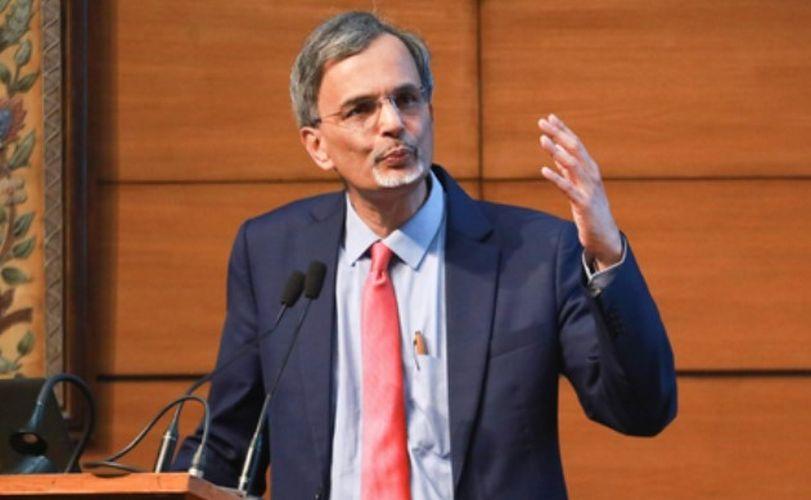
The status of the treaty featured prominently in the Ministry’s monthly report to Cabinet Secretary T.V. Somanathan earlier this week, indicating that the suspension remains unchanged.
In the report, Debashree Mukherjee, Secretary of the Department of Water Resources, River Development and Ganga Rejuvenation, reiterated that the treaty will stay suspended “until Pakistan credibly and irrevocably renounces its support for cross-border terrorism.”
The Indian government has also not shown interest in engaging with a recent proposal by Pakistan's Water Resources Secretary, Syed Ali Murtaza, who offered to discuss India's earlier objections in an effort to renegotiate the treaty.
These developments come amid contrasting statements from Jammu and Kashmir leaders regarding the revival of the Tulbul Navigation Project following the suspension of the IWT. The project, intended to rejuvenate the Jhelum-fed Wular Lake in Bandipora district, was launched in 1987 but halted in 2007 due to objections from Pakistan under the IWT.
With the treaty now suspended as of April 23—a day after the Pahalgam attack—Jammu and Kashmir Chief Minister Omar Abdullah has called for the project’s resumption. In a post on X, he remarked: “Since the water agreement with Pakistan is currently in abeyance, I wonder if we will be able to resume the project.”
However, former Chief Minister Mehbooba Mufti criticized the idea, calling Abdullah’s suggestion "irresponsible and dangerously provocative."
Meanwhile, Union Jal Shakti Minister C.R. Patil recently launched a web-based Reservoir Storage Monitoring System (RSMS) Portal. The Central Water Commission monitors live storage capacities of 161 key reservoirs across India and publishes a weekly bulletin every Thursday.
These reservoirs have a combined live storage capacity of 182.375 billion cubic meters (BCM) at full reservoir level, accounting for about 70.74% of the total live storage capacity estimated to have been created nationwide.
The bulletin is distributed to the Prime Minister’s Office, NITI Aayog, various ministries (MoJS, Power, Agriculture and Farmers Welfare), the India Meteorological Department (IMD), disaster management agencies, concerned states, and is also made publicly available on the CWC website.





| 14-09-2018 | ||||||
| Sl No. | Parameters | Actual Data(µg/m3) | Standard Limit(µg/m3) |
|---|---|---|---|
| 1 | PM 10 | 64 | 100 |
| 2 | PM 2.5 | 33 | 60 |
| 3 | SO2 | 55.3 | 80 |
| 4 | NO2 | 58.2 | 80 |
| 14-09-2018 | ||||||
| Station | Temperature(degree centigrade) | Rainfall(mm) | Relative humidity(%) | |||
|---|---|---|---|---|---|---|
| Max | Min | Past 24 hrs. | Since 1st March, 2018 | Max | Min | |
| Ranchi | 31.0 | 22.5 | 000.0 | 1010.1 | 95 | 66 |
| Jamshedpur | 34.1 | 26.2 | 000.0 | 1252.8 | 87 | 58 |
| Bokaro | 33.5 | 24.6 | 015.2 | 824.0 | 92 | 79 |
| Daltonganj | 32.6 | 24.9 | 004.2 | 960.9 | 95 | 67 |
© Copyright
Reporter Post.All Rights Reserved |
Powered by: Aptilogic Software |
 |
Page rendered in 0.0944 seconds.
|
Page rendered in 0.0944 seconds.