Mon, October 12, 2026
IANS
The political battle over the Rafale fighter jet deal intensified on Sunday, with then Union Finance Minister Arun Jaitley questioning former French President Francois Hollande's conflicting statements about the selection of an Indian private company as an offset partner.
Jaitley argued that there was no partnership of the kind suggested by Hollande in connection with the purchase of 36 Rafale aircraft by India. His comments came amid a growing political confrontation between the government and the opposition over allegations that the Narendra Modi government had influenced the selection of Reliance Defence as a partner for Dassault Aviation.
The controversy erupted after Hollande told French investigative website Mediapart that the Indian government had proposed Reliance Defence as Dassault's Indian partner. The statement was seized upon by the Congress, with party president Rahul Gandhi stepping up his criticism of the Modi government and alleging that the former French President's remarks raised serious questions about the Rafale agreement.
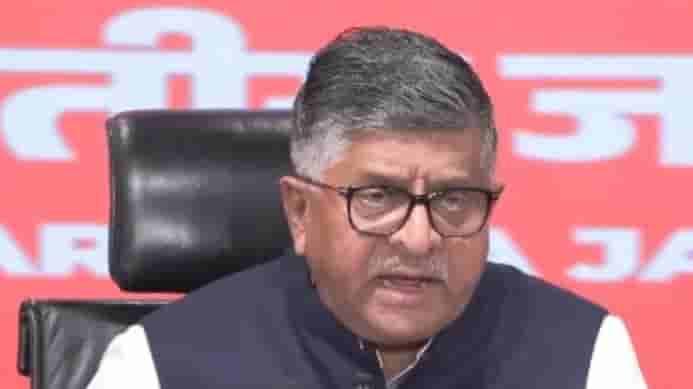
The Defence Ministry and then Law Minister Ravi Shankar Prasad had already rejected the allegation that the Indian government had any role in selecting Dassault's offset partners.
Jaitley, in a blog post, highlighted what he described as a contradiction in Hollande's subsequent comments. He said Hollande later indicated that Reliance emerged as a partner after the agreement with the Indian government and that he was not aware whether the Indian government had lobbied for the company.
“Truth cannot have two versions,” Jaitley wrote, arguing that the differing accounts raised questions about the original claim.
He also pointed to statements from the French government and Dassault Aviation, which had said that the selection of Indian companies for offset arrangements was a decision made by the French companies themselves rather than by the French or Indian governments.
According to Jaitley, Dassault had entered into multiple offset arrangements with both public and private Indian companies and was free to select partners under India's procurement framework.
Jaitley further argued that the purchase of 36 Rafale aircraft was based on a government-to-government agreement and did not involve manufacturing the aircraft in India. Therefore, he said, it was misleading to describe the aircraft supply agreement itself as a partnership between the Indian government and a private company.
He also cited a report quoting Hollande as saying that “France did not choose Reliance in any way” and referred to comments attributed to the former French President in Montreal, Canada, where he reportedly said he was unaware of whether India had pressured Reliance and Dassault to work together.
Jaitley also sought to counter the opposition's political attacks by questioning Congress' reliance on Hollande's remarks. He referred to an earlier Congress social media post alleging that Anil Ambani had bribed Hollande through his actor partner to secure the Dassault partnership.
The former Finance Minister said it was contradictory for Congress to accuse a former French President of being compromised by an Indian business group while simultaneously treating his statement as key evidence against the government.
He also defended the government's decision to purchase 36 Rafale aircraft, arguing that the earlier UPA-led process to acquire 126 jets had been delayed and that the NDA government had moved more quickly to strengthen India's military capabilities.
The controversy, however, remained unresolved as different accounts continued to emerge from France. While Jaitley relied on Hollande's later comments and statements from the French government and Dassault, an NDTV report said Hollande's office had reiterated that the former President stood by his original claim that the Indian government had proposed Reliance Defence as the Indian partner.
The conflicting claims turned the Rafale deal into a major political flashpoint, with the government maintaining that offset partners were selected independently by French companies and the opposition demanding greater transparency over the procurement process.


© Copyright
Reporter Post.All Rights Reserved |
Powered by: Aptilogic Software |
 |
Page rendered in 0.0101 seconds.
|
Page rendered in 0.0101 seconds.