Sun, October 11, 2026

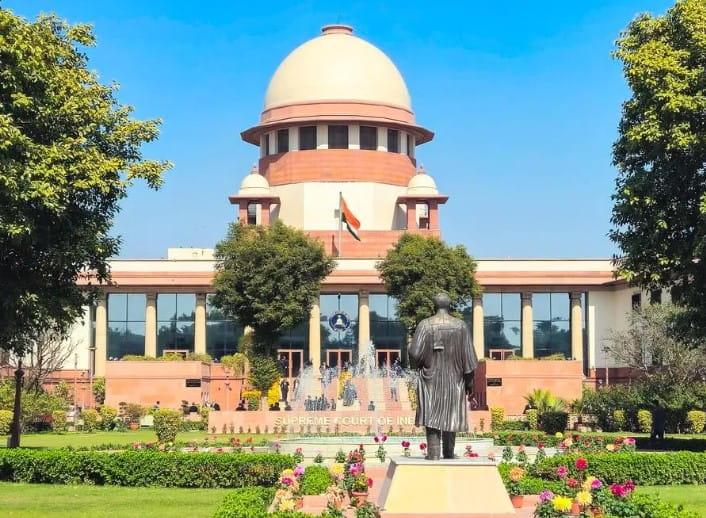
Representational Pic
The Supreme Court on Thursday reserved its order on a plea seeking a court-monitored Special Investigation Team (SIT) probe into allegations that five rights activists had links with the banned CPI (Maoist) and were involved in an alleged conspiracy to assassinate senior political leaders.
A bench headed by Chief Justice Dipak Misra and comprising Justices A.M. Khanwilkar and D.Y. Chandrachud reserved its decision after hearing arguments from both sides in the case.
Senior advocate Abhishek Manu Singhvi, appearing for the activists, challenged the Maharashtra Police investigation that led to the arrests of Varavara Rao, Arun Ferreira, Vernon Gonsalves, Sudha Bhardwaj and Gautam Navlakha.
Singhvi argued that serious questions had been raised over the credibility and manner of the investigation and therefore an independent SIT should be appointed under the supervision of the court.
Taking the court through the sequence of events surrounding the investigation and arrests, Singhvi alleged that the case had been built on questionable material. He also pointed out that there was no separate FIR specifically concerning the alleged Maoist conspiracy to assassinate senior leaders, including the Prime Minister.
According to Singhvi, the allegations surrounding an assassination plot were being used to create an atmosphere of fear and portray the activists as a serious threat.
The defence argued that where there are substantial doubts about the fairness and credibility of an investigation, judicial oversight becomes necessary to protect the integrity of the process.
Senior counsel Harish Salve, appearing for the complainant, opposed the demand for a court-monitored SIT investigation. He argued that the central issue before the court was to determine the point at which constitutionally protected free speech crosses into unlawful activity.
“If unlawful activities are involved, the investigation must continue,” Salve told the bench.
He also cautioned against making court-monitored SIT probes a routine remedy whenever a party questions the credibility of an investigation.
Salve questioned the logic of repeatedly seeking an independent agency whenever there are allegations against an investigating authority, saying that such an approach could undermine the existing investigative system.
“If they did not trust the CBI, NIA, who will they call? The FBI,” he remarked.
He further warned that there could be serious consequences if courts routinely ordered SIT investigations at the initial stages of criminal cases. According to Salve, allegations of false implication are not uncommon and the country's judicial system already provides multiple levels of scrutiny.
The case has drawn considerable attention because it involves the balance between individual freedoms, the right to dissent and the state's responsibility to investigate allegations involving banned organisations and possible violence.
The Supreme Court's decision on the plea will determine whether the investigation into the allegations against the five activists should continue under the existing police machinery or be transferred to an SIT under judicial monitoring.



© Copyright
Reporter Post.All Rights Reserved |
Powered by: Aptilogic Software |
 |
Page rendered in 0.0109 seconds.
|
Page rendered in 0.0109 seconds.