Mon, October 12, 2026

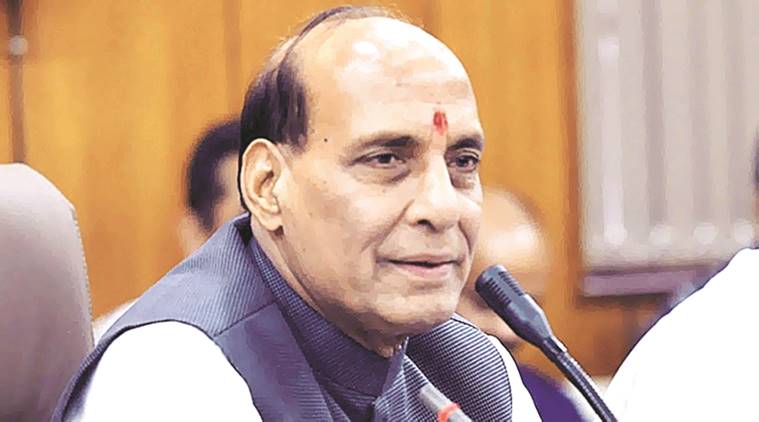
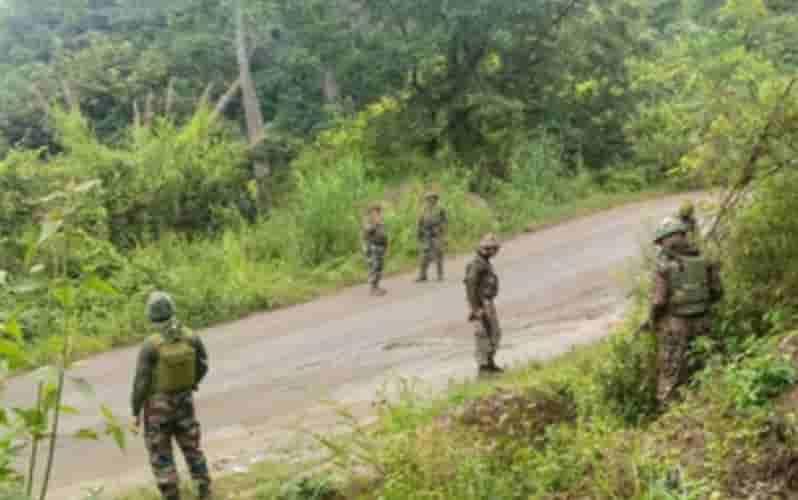
Representational Pic
Union Home Minister Rajnath Singh on Monday expressed hope that the new government in Pakistan would adopt a more positive approach towards building peaceful relations with its neighbours, including India.
Addressing the media at the BSF headquarters in the Paloura area of Jammu district, Singh said India had already taken several initiatives to improve ties and it was now up to Pakistan to create a conducive environment for better relations.
“Pakistan has its own nature and we cannot change their nature. They will have to do it,” he said.
The Home Minister pointed to Prime Minister Narendra Modi's earlier decision to visit Pakistan, saying India had made efforts to improve relations despite the challenges.
“Whatever initiatives India could take, we have taken. The Prime Minister broke protocol to visit Pakistan. I pray to God the new government in Pakistan understands how good relations are built with neighbours,” Singh said.
On the country's internal security situation, Singh said security forces were effectively dealing with challenges such as Naxal violence and terrorism in Jammu and Kashmir.
He highlighted the coordination among the Army, Central Reserve Police Force (CRPF) and Jammu and Kashmir Police in tackling security threats in the region.
“Whether it is the Naxal violence or terrorism in J&K, our security forces are dealing with this effectively. The Army, CRPF and state police are working here in absolute coordination,” he said.
Singh also appealed to the National Conference and the Peoples Democratic Party to reconsider their decision to boycott the forthcoming municipal and panchayat elections.
He said participation in local elections would provide political parties with an opportunity to establish a direct connection with people at the grassroots level.
“I appeal to these parties to take part in these elections because this is the only way to establish direct contact with the people,” he said.
Earlier in the day, Singh inaugurated two pilot projects for smart border fencing along the International Border in Jammu under the Comprehensive Integrated Border Management System (CIBMS).
Explaining the inspiration behind the initiative, Singh said he had seen a similar system during his visit to Israel and subsequently directed officials to explore its implementation in India.
“When I visited Israel, I saw this system there and immediately after that we started work on this project,” he said.
The CIBMS integrates advanced surveillance technologies to strengthen border monitoring, particularly in areas where conventional fencing and physical surveillance are difficult.
Singh said the system would be further refined based on feedback from the pilot projects, with the aim of making it more comprehensive and reliable.
“I have launched two such pilot projects here. We will launch a similar 60 km long pilot project in Assam,” he said.
The Jammu pilot projects are expected to provide practical experience in deploying technology-based border surveillance before the system is expanded to other vulnerable stretches.



© Copyright
Reporter Post.All Rights Reserved |
Powered by: Aptilogic Software |
 |
Page rendered in 0.0104 seconds.
|
Page rendered in 0.0104 seconds.