Mon, October 12, 2026

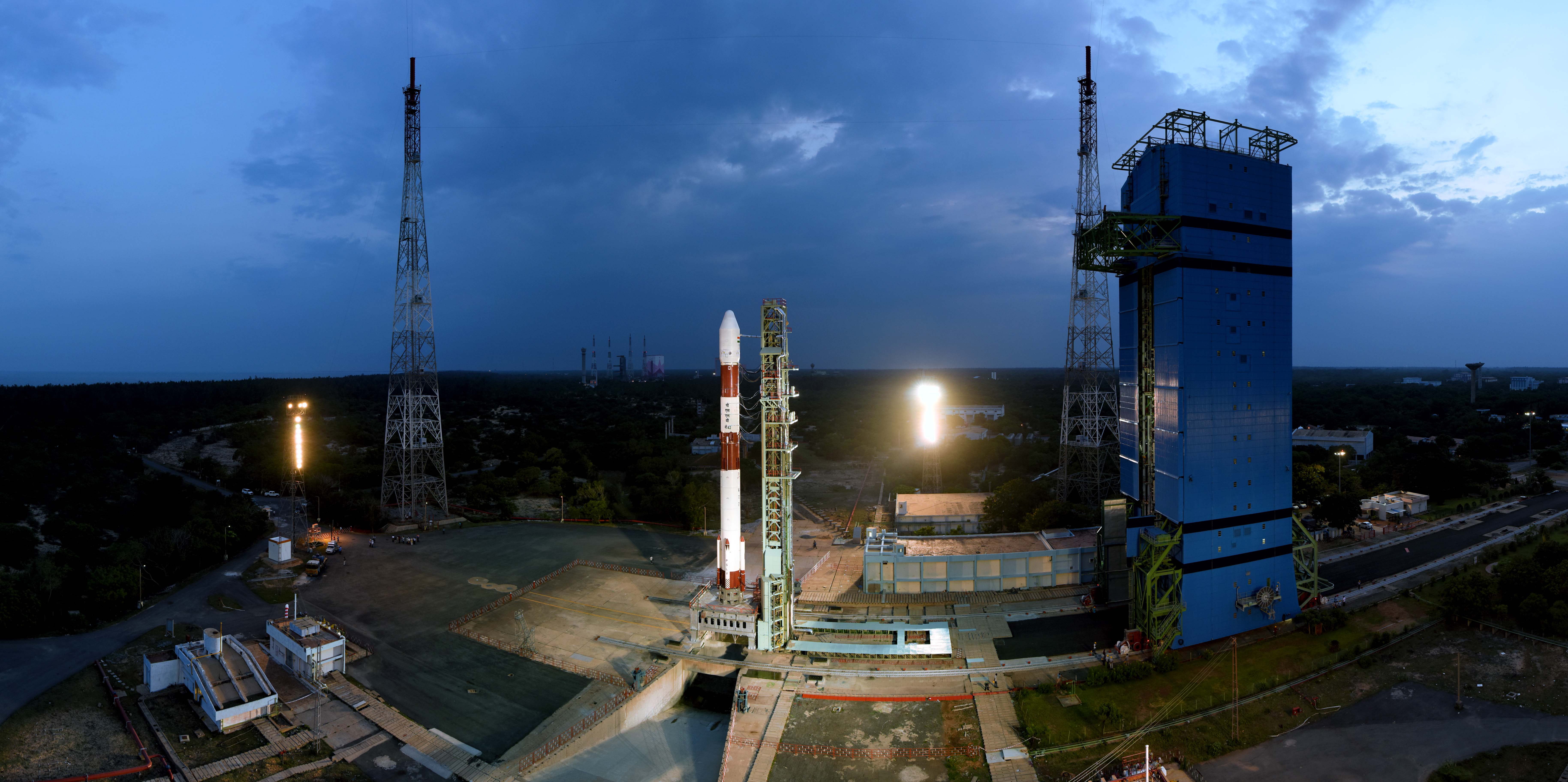
Image showing PSLV at the launchpad.Image credit ISRO
India on Sunday successfully launched two British earth observation satellites aboard the Polar Satellite Launch Vehicle (PSLV), further strengthening the country's position in the growing commercial space-launch market.
The satellites, NovaSAR and S1-4, were developed by Surrey Satellite Technologies Ltd (SSTL), UK, and were placed into a sun-synchronous orbit under a commercial agreement with Antrix Corporation Ltd, the commercial arm of the Indian Space Research Organisation (ISRO).
The two satellites had a combined lift-off mass of 889 kg. NovaSAR weighs 445 kg, while S1-4 has a mass of 444 kg.
NovaSAR is an S-band Synthetic Aperture Radar satellite designed for applications including forest mapping, land-use monitoring, ice-cover observation and flood and disaster monitoring. Its radar-based technology enables Earth observation even under conditions where conventional optical imaging may be limited.
The S1-4 satellite is a high-resolution optical Earth observation spacecraft intended for applications such as resource surveying, environmental monitoring, urban management and disaster assessment.
The four-stage PSLV-CA rocket lifted off at 10:08 p.m. from the first launch pad at the Satish Dhawan Space Centre in Sriharikota. Standing 44.4 metres tall and weighing around 230.4 tonnes, the rocket performed as planned during the mission.
Less than 18 minutes after liftoff, the PSLV deployed NovaSAR and S1-4 into their designated orbit at an altitude of around 583 km.
Following the successful launch, ISRO Chairman K. Sivan said the PSLV had precisely placed the two customer satellites in orbit and added that the mission would provide further momentum to efforts to expand industrial participation in PSLV production.
The launch also added to India's growing record of commercial satellite launches for international customers.
In August, Minister of State in the Prime Minister's Office Jitendra Singh had informed the Rajya Sabha that more than 200 foreign customer satellites had been launched by India over the preceding four years.
He said that, as of August 9, a total of 237 foreign satellites belonging to customers from 29 countries had been successfully launched using the PSLV.
With the successful deployment of the two British satellites, India's total number of foreign satellites launched rose to 239.
The government has also been looking to expand India's launch capacity in response to growing global demand for small and nano-satellite launches. Plans include increasing the frequency of PSLV missions and developing a dedicated small satellite launcher.
Antrix Corporation has also reported a strong commercial pipeline. Its Chairman-cum-Managing Director S. Rakesh said the company had an order book worth around Rs 980 crore, with contracts worth another Rs 500-600 crore in the pipeline for launch services during 2018-19 and 2019-20.
The successful mission therefore represents not only another operational achievement for ISRO but also highlights India's expanding role as a cost-effective provider of commercial satellite launch services for international customers.



© Copyright
Reporter Post.All Rights Reserved |
Powered by: Aptilogic Software |
 |
Page rendered in 0.013 seconds.
|
Page rendered in 0.013 seconds.