Sat, August 29, 2026


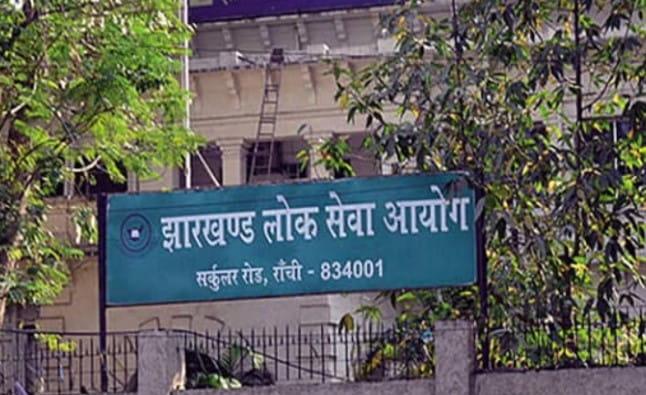
The Jharkhand High Court has delivered an important ruling concerning a woman's stridhan, holding that jewellery belonging to a wife does not become the husband's property merely because it is kept in a jointly operated bank locker.
The court restrained the husband from operating the joint locker without informing and obtaining the consent of his wife. It also upheld the wife's claim over the jewellery as her stridhan, making it clear that the right to operate a locker and ownership of the valuables kept inside it are separate legal issues.
The judgment was delivered by a division bench comprising Justice Sujit Narayan Prasad and Justice Pradeep Kumar Srivastava while hearing a first appeal filed by Bokaro resident Anil Kumar Singh.
Dispute over jewellery worth around Rs 25 lakh
The case relates to locker number GB-69 at the Union Bank of India branch in B.S. City, Bokaro. The locker was held jointly in the names of Anil Kumar Singh and his wife, Priya Raj.
Priya Raj told the court that gold and silver jewellery worth around Rs 25 lakh had been given to her by her parental and matrimonial families during her marriage. The jewellery was subsequently kept in the bank locker.
After marital differences developed between the couple, Priya Raj left her matrimonial home. She alleged that her jewellery, which constituted her stridhan, remained in the custody of her husband and the bank.
According to her, repeated requests for the return of the jewellery did not yield any result. She subsequently approached the Bokaro Family Court seeking protection of her stridhan and an order preventing the locker from being accessed without her knowledge and consent.
Husband claimed jewellery belonged to his family
Anil Kumar Singh contested his wife's allegations. He claimed that Priya Raj had already taken all her stridhan with her and that the jewellery remaining in the locker belonged to his mother, sister and sister-in-law.
The High Court, however, found that the husband could not produce sufficient evidence to substantiate this claim. The court also noted that neither his mother, sister nor sister-in-law was produced as a witness to support his assertion that the jewellery belonged to them.
The court found Priya Raj's statement consistent and credible. It also took note of evidence indicating that the concerned bank locker had been opened only after the marriage.
After considering the statements and other evidence, the bench gave greater weight to the wife's claim and declined to accept the husband's assertion regarding ownership of the jewellery in the absence of convincing supporting evidence.
Joint locker does not mean joint ownership of valuables
While considering the case, the High Court upheld the December 2024 order of the Bokaro Family Court and found no legal error in it.
The court's decision underscores an important distinction in disputes involving joint lockers: being a joint holder of a bank locker does not automatically confer ownership over every item stored inside it.
In this case, the jewellery claimed by the wife as her stridhan was treated as her property, and the husband was not permitted to exercise unilateral control over the locker in a manner that could affect her rights.
The High Court consequently dismissed the husband's appeal against the Family Court's order.
The ruling could have wider significance in matrimonial disputes involving jewellery and other valuables kept in jointly held lockers. It reinforces the principle that a woman's stridhan remains her property and that procedural access to a joint locker cannot, by itself, be treated as ownership of the valuables kept inside it.




© Copyright
Reporter Post.All Rights Reserved |
Powered by: Aptilogic Software |
 |
Page rendered in 0.092 seconds.
|
Page rendered in 0.092 seconds.