
Fri, November 13, 2026

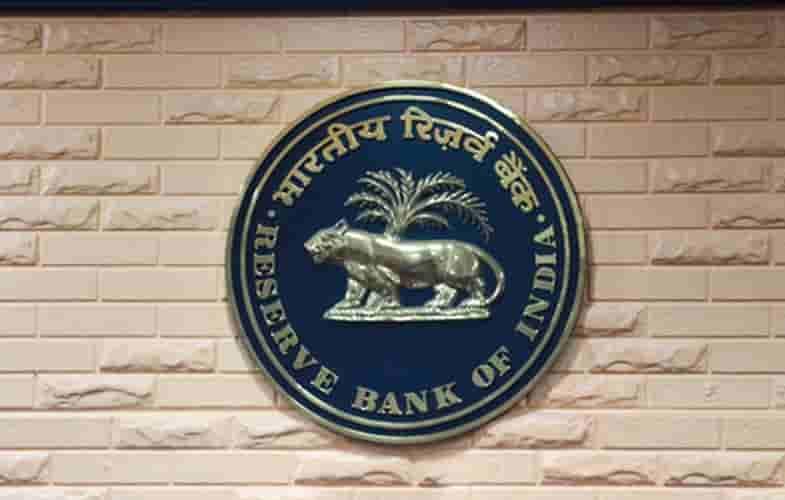
Photo: IANS
New Delhi: The Reserve Bank of India (RBI) is likely to raise its benchmark repo rate by 25 basis points in December, instead of the previously anticipated sharper 50-bps increase, as inflationary pressures, rupee volatility and global economic uncertainties show signs of easing, according to a report by SBI Research.
Revising its earlier assessment, the report said the balance of probabilities had shifted towards a smaller rate hike, while the possibility of lowering the terminal repo rate from 6 per cent to 5.75 per cent had also emerged. SBI Research has assigned an equal 50 per cent probability to both outcomes.
The revision comes even as retail inflation has crossed the RBI's upper tolerance limit for the first time in the new Consumer Price Index (CPI) series. Inflation stood at 6.09 per cent in October, marking the first time it has breached the 6 per cent threshold under the revised series.
The report expects inflation to remain above 6 per cent in November before gradually moderating in subsequent months.
"However, considering recent developments, we believe that the balance of probabilities has decisively shifted towards a 25-bps rate hike in December, rather than a larger 50-bps adjustment," the report said.
Several domestic and international developments have contributed to the revised outlook. SBI Research noted that the RBI's interventions to contain volatility in the rupee had yielded results, with the currency briefly recovering to below Rs 94 against the US dollar before weakening again.
Liquidity conditions have also improved. The overnight call money rate, which had climbed to around 5.8 per cent in the final week of October, subsequently declined below the Marginal Standing Facility (MSF) rate of 5.44 per cent.
An improvement in the external environment, supported by a recovery in foreign capital flows, is also expected to reduce pressure on the domestic currency. SBI Research said a correction in excessive valuations surrounding artificial intelligence (AI) companies could improve India's relative market valuations and encourage further foreign institutional investor (FII) inflows.
Foreign investors have already brought approximately $7.65 billion into Indian markets since November 6, according to the report.
The report also highlighted developments surrounding AI company Anthropic, including its anticipated entry into the public equity market around November 12. It noted that expectations of a valuation between $1.5 trillion and $2 trillion had been scaled down significantly to around $1.4 trillion, making it an important indicator of whether the AI investment boom can sustain its current momentum.
Meanwhile, the possibility of a de-escalation in the US-Iran conflict has improved the outlook for crude oil prices. Crude prices have declined 11 per cent since the US elections, and SBI Research expects them to moderate from recent elevated levels, averaging around $87.
The report also anticipates a further softening of US Treasury yields following the Democrats' victory in the US mid-term elections. It expects the US 10-year Treasury yield to move towards 4.75 per cent.
For India, the 10-year government bond yield is projected to remain within the 6.75-7 per cent range, although the trend is now expected to be tilted downwards.
SBI Research said expectations of three to four consecutive repo rate increases, which had gained traction earlier, now appeared unlikely.
"Importantly, expectations of three to four successive rate hikes, which had gained traction earlier, now appear to be an outlier. We see the terminal repo rate settling at around 6 per cent, with a downside possibility of 5.75 per cent. We assign a 50:50 probability to both these possibilities," the report said.
The research team also does not consider another rate hike in February advisable, particularly with the Union Budget approaching. Instead, it expects a 25-bps increase in December to be followed by a policy approach guided more closely by incoming economic data.




© Copyright
Reporter Post.All Rights Reserved |
Powered by: Aptilogic Software |
 |
Page rendered in 0.4395 seconds.