
Thu, October 29, 2026

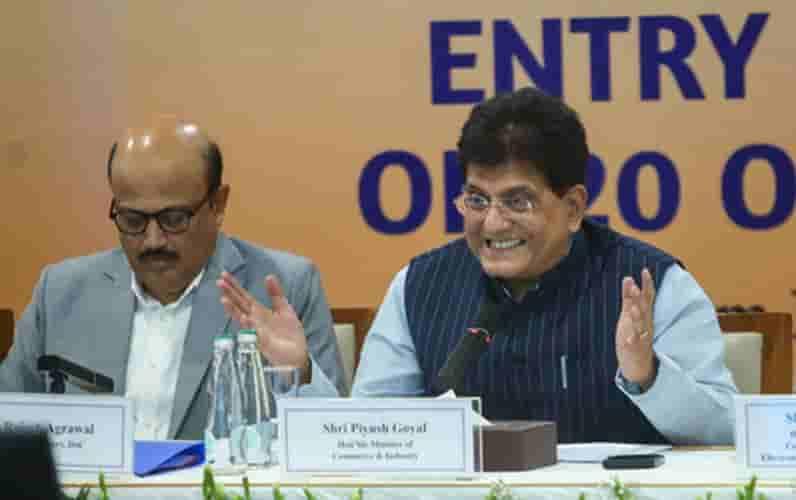
Photo: IANS
Commerce and Industry Minister Piyush Goyal on Thursday said the India-US trade deal would safeguard the sensitive interests of farmers and other stakeholders, expressing confidence that the terms of the negotiations would demonstrate India's strong competitive position once made public.
Speaking at the Fourth National Conference on India's Industrial Transformation, organised by the Institute for Studies in Industrial Development (ISID) and the Industrial Development Research Association (IDRA), Goyal said India had not compromised its key interests in the negotiations. He added that trade should be assessed in terms of comparative advantage and competitiveness rather than absolute figures alone.
Goyal noted that several developed countries maintained high tariffs on labour-intensive products, using them as bargaining instruments during trade negotiations.
Explaining India's broader trade strategy, the minister said the country's trade agreements went beyond tariff reductions, rules of origin and market access. According to an official statement, these agreements were designed as comprehensive partnerships that identified India's export strengths, protected sensitive sectors and facilitated access to technologies and products essential for development.
These included high-technology products, graphics processing units (GPUs), memory technologies and medical equipment, he said.
Goyal added that India's trade negotiations also covered services, investment, education, skill development, technology partnerships and cooperation on climate goals and countries' nationally determined contributions.
He said extensive consultations with stakeholders were undertaken before agreements were finalised, allowing India to expand its integration with the global economy while protecting sensitive sectors and other domestic interests.
Trade agreements open access to $60 trillion in markets
According to Goyal, India's trade agreements now cover 38 developed and relatively prosperous countries, creating opportunities for complementary trade. Under this approach, India can export goods for which partner countries have demand while importing products and technologies needed for its own development.
He said nine free trade and bilateral trade agreements concluded by the government had opened preferential market opportunities in economies with a combined GDP of $60 trillion. In comparison, agreements concluded before 2014 covered economies with an aggregate GDP of $10 trillion.
Goyal said the earlier agreements were largely with countries that competed with India, whereas the current strategy aimed to build more complementary economic relationships.
Quality and innovation key to industrial transformation
The minister also stressed that India's industrial transformation would depend on product quality, economies of scale, access to global markets and inclusive growth. He called for closer cooperation among the government, industry, academic institutions and research organisations to accelerate innovation.
Goyal said India should aspire to become a globally recognised manufacturing hub and work towards achieving the goal of 'Viksit Bharat 2047' through coordinated efforts across these sectors.
The minister's remarks highlighted the government's stated approach of expanding international trade and access to technology while seeking to protect domestic interests and strengthen India's manufacturing competitiveness.



© Copyright
Reporter Post.All Rights Reserved |
Powered by: Aptilogic Software |
 |
Page rendered in 0.0103 seconds.