Mon, July 06, 2026


Coimbatore- Coconut exports from Pollachi, Tamil Nadu's largest coconut-producing region, are gradually recovering as tensions in West Asia ease and demand from Gulf countries begins to pick up, bringing much-needed relief to farmers and exporters after months of disruption.
Fresh enquiries from key Gulf markets have revived overseas trade, which had nearly come to a halt during the conflict in West Asia. Pollachi, one of India's leading coconut export hubs, sends a significant portion of its produce to Gulf nations and had witnessed a sharp decline in shipments over the past three months, impacting both growers and exporters.
While export activity has resumed, the industry continues to grapple with elevated freight charges. Although shipping costs have come down from the peak levels seen during the conflict, they remain substantially higher than normal, affecting exporters' profit margins.
The spike in freight rates and delays in cargo movement had caused heavy losses for exporters, with several consignments deteriorating before reaching their overseas destinations.

Industry representatives are optimistic that exports will gradually return to pre-conflict levels as enquiries from Gulf buyers continue to increase.
Before the disruption, exporters from the Pollachi region regularly shipped multiple containers of coconuts each day through Kochi Port. However, export operations through the port remained largely suspended for nearly three months.
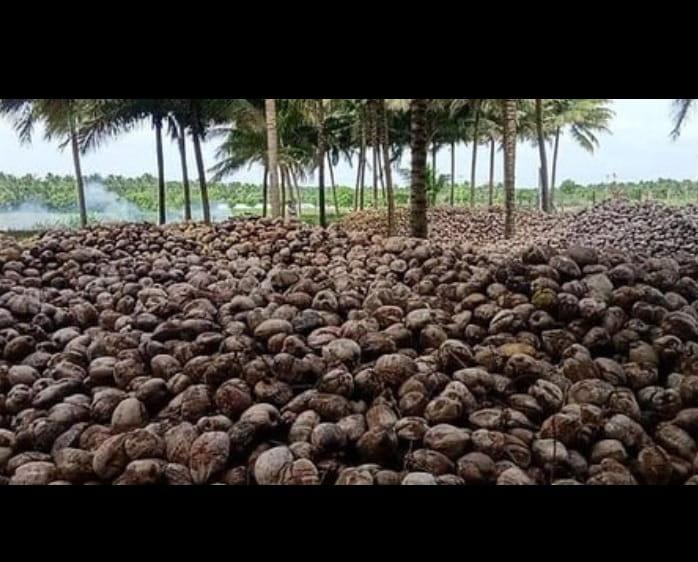
The prolonged slowdown in exports also created an oversupply in the domestic market, leading to a steep fall in coconut prices. Wholesale prices have dropped to around Rs 40,000 per tonne, compared to nearly Rs 65,000 per tonne during the same period last year.
The price decline has been further driven by a bumper harvest, which has significantly increased arrivals in the market. However, labour shortages have prevented prices from falling even further. A shortage of migrant workers has affected harvesting and de-husking operations across the region, limiting the volume of coconuts reaching markets.
Farmers expect the current high production phase to continue for another two months before the harvesting season begins to slow.
At the same time, growers are increasingly worried about next year's crop. Below-normal rainfall and emerging drought-like conditions have raised concerns about lower production in the coming season, which could eventually push coconut prices higher.
Water scarcity has already become a major challenge. With groundwater levels declining due to inadequate rainfall, many farmers have started depending on tanker water to irrigate their coconut groves and protect the trees from prolonged dry spells, even as they hope the revival in exports will help stabilise the market.
With inputs from IANS




| 14-09-2018 | ||||||
| Sl No. | Parameters | Actual Data(µg/m3) | Standard Limit(µg/m3) |
|---|---|---|---|
| 1 | PM 10 | 64 | 100 |
| 2 | PM 2.5 | 33 | 60 |
| 3 | SO2 | 55.3 | 80 |
| 4 | NO2 | 58.2 | 80 |
| 14-09-2018 | ||||||
| Station | Temperature(degree centigrade) | Rainfall(mm) | Relative humidity(%) | |||
|---|---|---|---|---|---|---|
| Max | Min | Past 24 hrs. | Since 1st March, 2018 | Max | Min | |
| Ranchi | 31.0 | 22.5 | 000.0 | 1010.1 | 95 | 66 |
| Jamshedpur | 34.1 | 26.2 | 000.0 | 1252.8 | 87 | 58 |
| Bokaro | 33.5 | 24.6 | 015.2 | 824.0 | 92 | 79 |
| Daltonganj | 32.6 | 24.9 | 004.2 | 960.9 | 95 | 67 |
© Copyright
Reporter Post.All Rights Reserved |
Powered by: Aptilogic Software |
 |
Page rendered in 0.0777 seconds.
|
Page rendered in 0.0777 seconds.