Tue, April 21, 2026
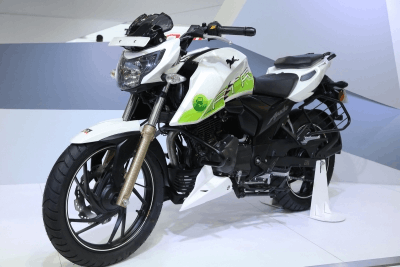
New Delhi: India’s two-wheeler industry scaled a new peak in FY26, with domestic wholesale volumes touching a record 22 million units, according to a report by ICRA.
The report noted a strong finish to the fiscal year, with wholesale volumes rising around 20 per cent year-on-year in March 2026, while retail sales surged 28.7 per cent. For the full year, domestic two-wheeler volumes grew by about 11 per cent.
However, growth is expected to moderate in FY27, with ICRA projecting a 3–5 per cent increase in wholesale volumes. This slowdown is attributed to a high base effect and concerns over a weak monsoon due to El Nino, which could impact rural demand.
Despite these challenges, factors such as GST rationalisation and improving replacement demand are expected to support the market.
Domestic wholesale volumes grew 10.2 per cent year-on-year in FY26, driven by GST reforms, particularly in the second half of the year. While growth remained modest at around 1 per cent in the first half, it accelerated sharply to over 20 per cent in the latter half.
Retail sales also showed robust momentum, growing 13 per cent for the full fiscal year, with a notable spike in March.
The growth was supported by improved rural cash flows and favourable macroeconomic conditions, including repo rate cuts and income tax relief, which boosted consumer sentiment. A wider product range catering to both entry-level buyers and premium segments also contributed to the surge.
Electric two-wheelers continued to gain traction, with sales rising to 1,92,023 units in March 2026—an increase of 47.4 per cent year-on-year. For FY26, electric two-wheeler volumes grew by 21.9 per cent, with their market penetration reaching 9.4 per cent in March and 3.3 per cent for the full year.
Exports also remained strong, growing 17.5 per cent year-on-year in March and 23.3 per cent over the full fiscal year, supported by expanding product portfolios and rising global recognition of Indian brands.
However, the report cautioned that ongoing geopolitical tensions in West Asia could pose risks to supply chains and exports, with industry players closely monitoring the situation.
With inputs from IANS




| 14-09-2018 | ||||||
| Sl No. | Parameters | Actual Data(µg/m3) | Standard Limit(µg/m3) |
|---|---|---|---|
| 1 | PM 10 | 64 | 100 |
| 2 | PM 2.5 | 33 | 60 |
| 3 | SO2 | 55.3 | 80 |
| 4 | NO2 | 58.2 | 80 |
| 14-09-2018 | ||||||
| Station | Temperature(degree centigrade) | Rainfall(mm) | Relative humidity(%) | |||
|---|---|---|---|---|---|---|
| Max | Min | Past 24 hrs. | Since 1st March, 2018 | Max | Min | |
| Ranchi | 31.0 | 22.5 | 000.0 | 1010.1 | 95 | 66 |
| Jamshedpur | 34.1 | 26.2 | 000.0 | 1252.8 | 87 | 58 |
| Bokaro | 33.5 | 24.6 | 015.2 | 824.0 | 92 | 79 |
| Daltonganj | 32.6 | 24.9 | 004.2 | 960.9 | 95 | 67 |
© Copyright
Reporter Post.All Rights Reserved |
Powered by: Aptilogic Software |
 |
Page rendered in 0.0748 seconds.
|
Page rendered in 0.0748 seconds.