Thu, October 22, 2026

New Delhi— India’s media and entertainment (M&E) sector is entering a new phase of rapid expansion and digital transformation, with its market size reaching Rs 2.78 trillion in 2025, marking a strong 9% growth—faster than the country’s nominal GDP.
According to a joint report by FICCI and Ernst & Young, the industry is projected to grow to Rs 2.86 trillion in 2026 and further scale up to Rs 3.3 trillion by 2028.
Digital media has now taken the lead as the biggest segment, crossing Rs 1 trillion in revenue. It dominates advertising as well, contributing 63% of total ad spends. Subscription revenues are also rising sharply, driven by OTT platforms, premium sports content, and increasing demand for regional programming.
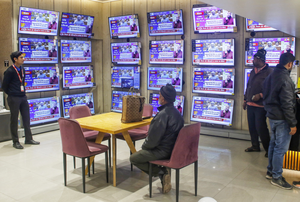
Meanwhile, traditional television continues to lose ground. The segment declined to Rs 617 billion in 2025 and is expected to contract further at a negative 5% CAGR, despite the number of TV households likely exceeding 200 million by 2028.
One of the most significant shifts in the industry is the surge in regional content. Regional languages now account for more than half of OTT consumption and nearly two-thirds of film production, reflecting changing audience preferences across the country.
Content production remains massive, with nearly 200,000 hours created in 2025, led primarily by television, alongside OTT and short-form video formats. However, traditional media is facing increasing pressure due to declining subscriptions and shifting advertising budgets.
Advertising continues to be a key growth engine, expanding 13.5% to Rs 1.5 trillion, largely fueled by digital platforms, e-commerce, and participation from small and medium businesses.
The live events segment also saw a major surge, growing 44% due to higher spending on ticketed shows, weddings, government functions, and large-scale religious events like the Maha Kumbh Mela.
Despite strong growth, the report highlights challenges such as declining pay-TV subscribers, weak monetisation in the news segment, and regulatory hurdles in online gaming. The gaming sector, in particular, is expected to shrink sharply with a negative CAGR of 22% between 2025 and 2028.
Industry leaders describe 2025 as a turning point, with the sector now driven by evolving consumer behaviour and rapid technological advancements. Emerging formats like creator-led platforms, micro-dramas, and immersive experiences are expected to shape the next phase of growth.
Overall, the industry is on track to cross Rs 3 trillion by 2027, with digital media firmly at the center of its expansion.
With inputs from IANS



© Copyright
Reporter Post.All Rights Reserved |
Powered by: Aptilogic Software |
 |
Page rendered in 0.0109 seconds.
|
Page rendered in 0.0109 seconds.