
Thu, October 15, 2026

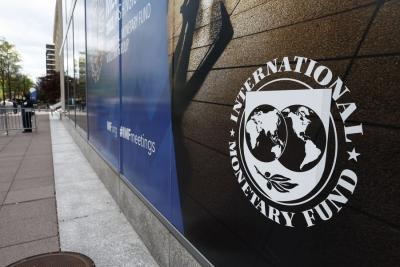
New Delhi: The Pakistan government has become heavily dependent on borrowing from the International Monetary Fund (IMF), much like a drug addict, and has failed to break free from a self-created cycle of foreign exchange shortages that are temporarily managed through IMF assistance, according to a new report.
The report, authored by former Deputy Governor of the State Bank of Pakistan Riaz Riazuddin and published in Pakistan’s Dawn newspaper, criticises the government for persistent fiscal indiscipline, excessive and unnecessary spending, and an inability to generate adequate revenues to keep public debt at sustainable levels.
Drawing a parallel between substance addiction and chronic borrowing, the article notes that habitual borrowers often expect bailouts, debt rollovers, or forgiveness, leading them to spend beyond sustainable limits in the belief that relief will arrive in the future. In both cases, the risks of such behaviour are either poorly understood or deliberately ignored.
The article argues that while external financial support may provide short-term stability, it ultimately erodes fiscal discipline. Initial borrowing may address immediate problems or boost consumption, but over time, a growing share of income is diverted towards debt servicing. Eventually, borrowing no longer supports growth and instead merely sustains survival.
Denial is highlighted as another common trait. Just as an addict claims they can quit anytime, a compulsive borrower assumes that economic growth will rebound. Such thinking, the article states, reinforces moral hazard and deepens over-indebtedness.
The report points out that Pakistan is currently undergoing its 25th IMF programme, making the government’s continued behaviour particularly concerning. It describes the country’s high debt levels as a result of foreign exchange misuse, often driven by keeping the rupee overvalued, which boosts imported consumption and worsens fiscal excesses. This, it notes, has occurred through direct market intervention or by failing to adequately purchase foreign exchange.
Using the analogy of therapy, the article remarks that while drug addicts require treatment, governments receive periodic “therapy” through IMF reviews. However, it argues that this approach has been ineffective, as policymakers are already aware of sound economic principles but fail to implement them.
The report also observes that recent improvements in Pakistan’s foreign exchange position are largely due to higher remittances rather than structural reforms. Exports remain stagnant, and the rupee continues to be overvalued in real terms.
It further notes that when foreign exchange accumulation aligns with IMF prescriptions, the Fund rarely objects to currency overvaluation, aside from advising that exchange rates be determined by the interbank market.
The article concludes that unless the authorities commit to genuine reforms, IMF programmes will primarily benefit the government, while the general public—who bear the long-term costs of delayed reforms—will continue to suffer.
With inputs from IANS



© Copyright
Reporter Post.All Rights Reserved |
Powered by: Aptilogic Software |
 |
Page rendered in 0.0132 seconds.
|
Page rendered in 0.0132 seconds.