
Mon, October 12, 2026

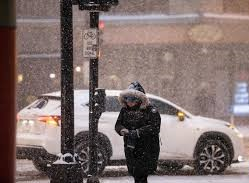
New York: The death toll from a massive winter storm sweeping across the United States has risen to at least 28, as heavy snowfall, freezing rain and plunging temperatures caused widespread disruption over the weekend.
According to reports, the fatalities include two people struck by snowplows in Massachusetts and Ohio, as well as deaths linked to sledding accidents in Arkansas and Texas. In New York City alone, officials said eight people were found dead outdoors after nighttime temperatures dropped sharply, Xinhua news agency reported.
From the northeastern state of Massachusetts to Texas in the south, roads were rendered treacherous by ice and deep snow, in many places exceeding 30 cm. Several southern states experienced winter conditions not seen in decades.
Power outages were extensive, with nearly 700,000 customers across the mid-Atlantic and southern regions without electricity as of 4 p.m. Eastern Time on Monday, according to poweroutage.com. Mississippi, Tennessee and Louisiana were among the worst affected, where freezing rain brought down trees and power lines, triggering widespread blackouts.
The storm also severely disrupted air travel. More than 12,500 flights were cancelled across the US on Sunday—the highest single-day total since the start of the COVID-19 pandemic in 2020.
By Monday afternoon, over 5,200 flights entering, leaving or operating within the US had been cancelled, while more than 6,600 flights were delayed, according to flight-tracking service FlightAware.
The Federal Aviation Administration reported ground delays at major airports due to snow and ice, including Ronald Reagan Washington National Airport, Dallas Fort Worth International Airport and New York’s John F. Kennedy International Airport.
US Transportation Secretary Sean Duffy said he expects airports to return to normal operations by Wednesday.
In New York City, all public schools remained closed on Monday, with students shifting to remote learning.
Although the storm system was forecast to move off the East Coast into the Atlantic by Monday, the National Weather Service warned that an influx of Arctic air behind it would extend sub-freezing temperatures for several more days.
Connecticut Governor Ned Lamont announced an extension of the state’s severe cold weather protocol until February 5, citing forecasts of single-digit overnight temperatures over the next 10 days. He noted that this marks the longest such cold weather protocol in the state in more than a decade.
With inputs from IANS



© Copyright
Reporter Post.All Rights Reserved |
Powered by: Aptilogic Software |
 |
Page rendered in 0.0115 seconds.
|
Page rendered in 0.0115 seconds.